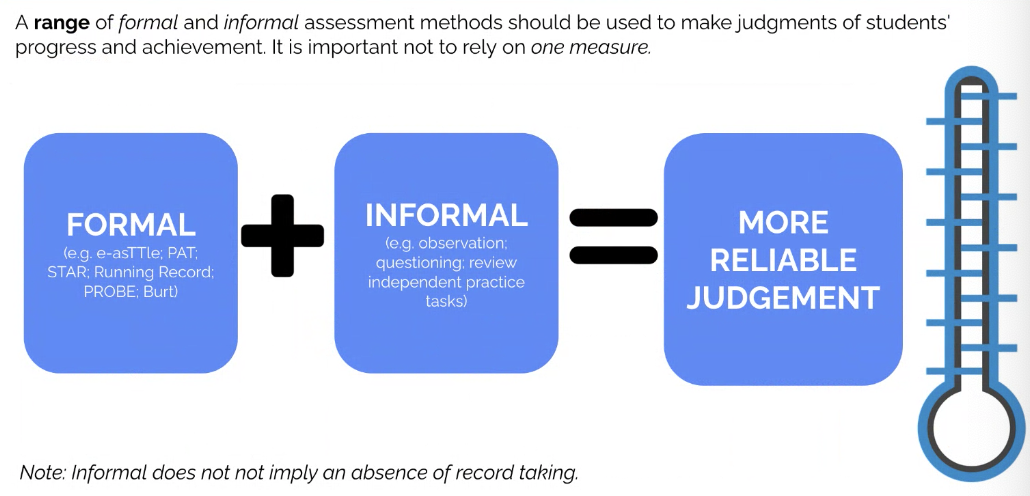
Now that the summative assessments for the year are approaching completion, I am able to use my results and data to answer my Inquiry Question : Has implementing the RPI strategies had an impact on reading comprehension?
Sunday, November 5, 2023
EOY Teacher Inquiry
Monday, September 11, 2023
Sharing - RPI
- Encouraging spontaneity without stifling enthusiasm.
- Inspiring students to share items of their own interest.
- Creating an easily recognizable icon that prompts students to blog.
- Monitoring the completion of sharing activities.
- Defining priority reading-related learning that learners should post to their blogs weekly.
- Setting clear learning goals and aligning posting schedules with students' availability.
- Promoting audience engagement through comments and discussions.
- Prioritizing content quality over quantity.
- Allowing time for reflection and revision.
- Establishing a feedback loop for constructive feedback on posts.
- Encouraging diverse content formats and topics to keep blogs engaging.

- Reinforcing ways for students to take books home and involve their families.
- Encouraging families to participate in reading challenges.
- Soliciting recommendations for texts from families.
- Creating spaces for family feedback and involvement in reading activities.
Teacher Inquiry - Create Tasks Implemented in Reading
Session 8 of the Manaiakalani Reading Programme Intensive (RPI) focused on different types and kinds of opportunities for students to create. Our homework was to incorporate a type of create task into our reading programme. Below I have linked (with permission) some of my student's completed create tasks as well as what the teacher / student instructions were for each task.
Text : Changing Matter on Epic.
Here are the instructions students received at the end of the response to text slides:
- CREATE: Create a DLO that shows and explains “Changing Matter”. Use any information you think is important from the text to guide you. Your DLO can be an animation, slideshow, or poster.
Kato chose to create an animation of an ice cube melting then evaporating. Click here to read his blog post. (Shared with permission.)
Text : Aztec Attack.
Here are the instructions students received at the end of the response to text slides:
- CREATE: Choose a specific scene from the story "Aztec Attack!" that you want to recreate in Google Drawings. This could be the moment when Izquixochitl first spots the approaching men or the village's preparations for battle.
Loa chose to recreate the scene in the story where two parties are at war. Click here to read his blog post. (Shared with permission.)
Text : Bright Family on Epic.
Here are the instructions students received at the end of the response to text slides :
- CREATE: Create your own backdrop of a universe you think they may come across in the next part of the story. Use the background remover app to insert yourself into that universe. Use a speech bubble to show what you would be saying in that situation!
This is an example of a "short" create task that could and was asked to be completed within the 1 hour block. Click here to read Dito's blog post. (Shared with permission.)
- Students enjoyed seeing themselves in their Create tasks.
- Students appreciated the choice of medium, and were more engaged when they got to choose the format.
- Some students work better with more guidance (where they have to decide less) but some maybe needed less guidance in order to feel and be more creative.
- Some students went on a tangent to the point the task was no longer connected to the task.
- For my more advanced groups, I found that I've often left more decisions for the students to make compared to my lower groups where I would scaffold them a bit more.
- I will change my Create tasks so each student gets a sufficient range of tighter tasks that they can start and finish in a block, as well as looser tasks they are given a week to finish on their own. That way the students can achieve completion more often.
Monday, August 21, 2023
Create in Reading - RPI Day 4
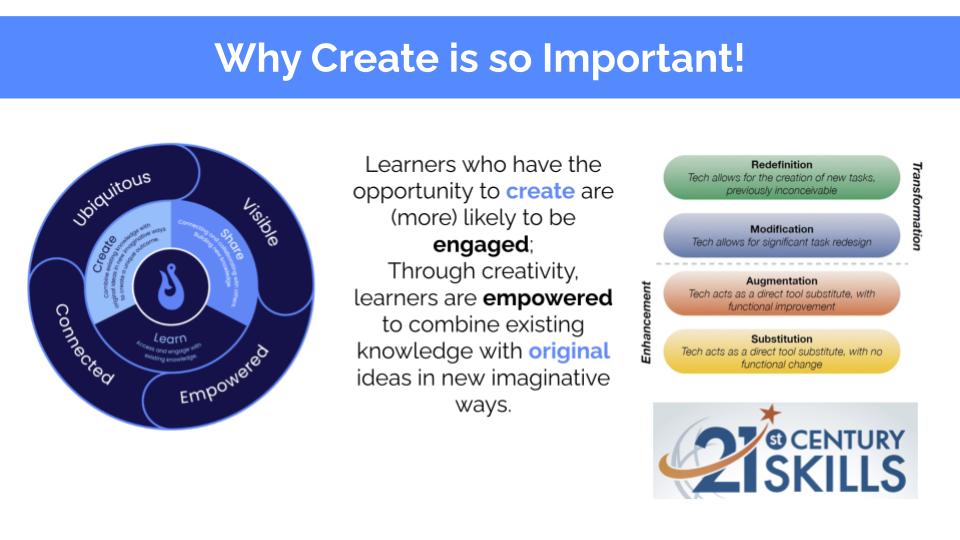
Today saw the 8th session of the Manaiakalani Reading Practice Intensive (RPI) course. The primary focus of the day was to delve into the "Create" aspect within the Manaiakalani pedagogy—an area I've been eager to learn more about.
Dorothy's introductory session set the stage by emphasising the role of creativity within the Manaiakalani pedagogy. She stressed the importance of fostering student empowerment through creative contributions rather than passive consumption. The resonance of James Gee's quote underscored the significance of nurturing creativity to foster critical thinking and innovative skills. “You don’t empower people by just being consumers. Teaching people to read and not write, teaching people to play and not design is the way to make customers and consumers and not producers and creative thinkers”
I also learnt about the concept of 'SiSoMo'—the amalgamation of sight, sound, and motion —and how it is used to capture the essence of creativity. This concept highlighted the potential that lies in student responses. Our exploration extended to AI tools such as Craiyon.com and Adobe Firefly, demonstrating how technology can facilitate swift yet meaningful creative projects that lead to deeper insights.
Naomi's session highlighted the beauty of collaborative learning, both 'outside' and 'inside' the create. This approach opens doors for peer co-authoring and co-constructing, nurturing a sense of ownership and pride in their creations.
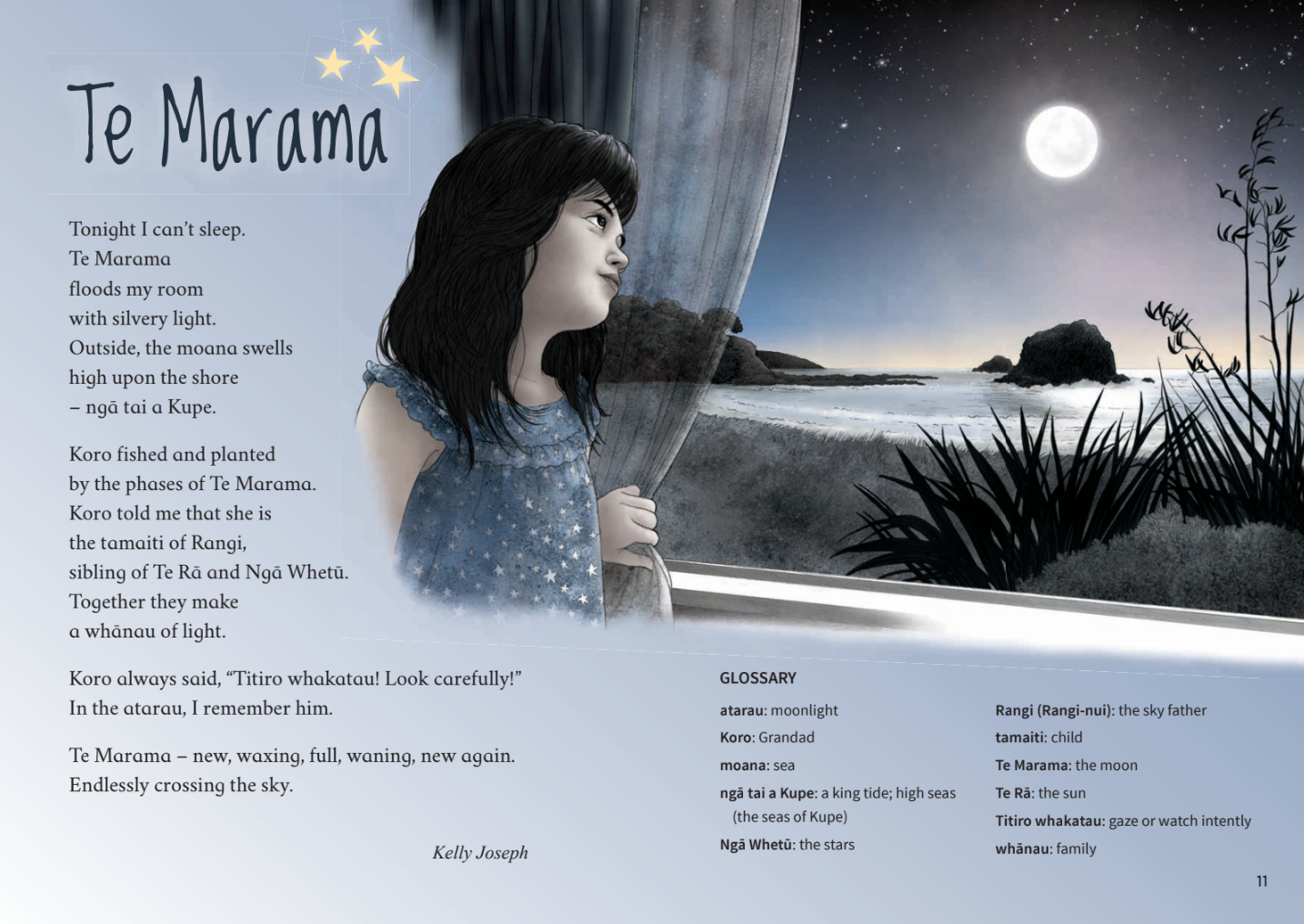
Te Marama by Kelly Joseph - RPI Create
Today we imagined we were book illustrators using the poem "Te Marama" by Kelly Joseph. We compared our illustrated poem with the published version. One of the differences between my poem and the published one is I have used much less colour. Another difference is the published version uses illustration to fill the space. On the other hand, some similarities with my poem are the readability of the font. I made use of an AI content generator Dorothy introduced us to which is craiyon.com to generate the image of the moon sitting on the ocean.
The parts I like more about the published version is that it uses more illustration to fill the space, which would probably appeal more to students than a minimalistic version such as the one I have created. Below are some of the other versions my cohort created. The images are linked to their professional blogs. Ngā mihi Mrs Lagitupu and Mr Hughes for your work.
Wednesday, August 2, 2023
Thinking - RPI
Day 7 of the Manaiakalani Reading Programme Intensive (RPI) focused on the aspect of 'thinking' and how we can best incorporate this into our reading programmes and planning. I found this particularly useful for me to consider in the future when designing response to text activities.
As teachers of reading, one of our main goals is to foster critical thinking skills in our students. This allows them to engage with texts at a deeper level, analyse different perspectives, and make informed decisions. In Day 7's session, we talked about how response to text activities can provide opportunities for students to practice higher order thinking. We also explored the importance of moving beyond literal comprehension and how we can effectively design tasks to promote independent critical analysis.
Moving Beyond Literal Comprehension : Something I had never thought about before was the importance of moving beyond literal comprehension. Literal thinking is an essential foundation for reading, but it is only the starting point. If we keep teaching students "on the line", they aren’t able to go to that level of reading intuitively where they read between the lines.
To fully engage with a text, learners need to develop the ability to analyse, interpret, evaluate, and create something from their new learning. These higher order thinking skills enable students to explore complex meanings, consider multiple perspectives, and form their conclusions.
Throughout the day we focused on three effective ways we can plan for learners to think beyond the literal :
- Modelling (critical analysis of text, questioning & ‘thinking about thinking’)
- Response to Text Activities (including higher level ‘Create’)
- Extended Discussion
We spent a bit of time going through examples of effective response to text activities, as well as getting a start on some tasks that incorporated the different levels of thinking. When designing response to text tasks, it is important to provide a balanced range of thinking opportunities. We can use the "levels of thinking" approach to scaffold students' critical thinking. The levels include:
Literal Level: Understanding the surface meaning of the text.
Interpretive Level: Analysing and making inferences from the text.
Evaluative Level: Evaluating the text, questioning its perspectives, and identifying bias.
At first I had a moment of concern, as I couldn't recall a time I had deliberately planned for "interpretive" and "evaluative" thinking from my students. Thankfully, I realised that I had indeed included opportunities for these levels of thinking, but had not realised that I had done so. One major learning for me is that students would benefit from me being more deliberate in planning tasks that require more than just the literal level of thinking.
One part of the day that I feel helped to grow my pedagogy was when Georgie began breaking down Bloom's Taxonomy, in regards to analysis :
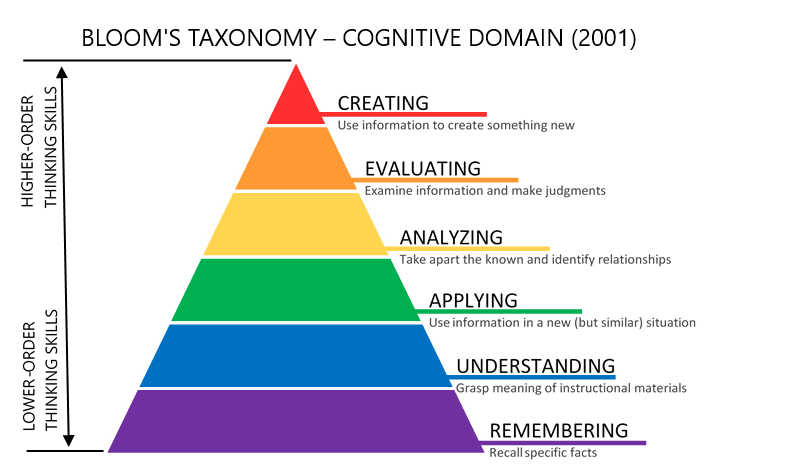
We can consider analysis as the opposite to summarising. Here are the key things about analysis I took from our session :
- Summarising involves paraphrasing to make a shorter version of the source text, reducing it to its main ideas or key information. Analysis, on the other hand, involves close reading of the text to identify particular features that communicate or reinforce the main ideas i.e. noticing details in language, structure and other devices the author has chosen to achieve their purpose.
- A well understood strategy for understanding deeper, more complex meanings is breaking down the whole into its component parts. Bloom’s shows the bridge into synthesis and evaluation via analysis such as breaking a topic or idea into its elements or examining a subject from different perspectives.
- It helps us see how the “whole” is created from the “parts.” It’s easy to miss the big picture without seeing how the parts are connected. Analysis helps reveal the connections and relationships between the parts to extend and deepen understanding.
- Analysis can be used for two things
- To zoom in. “What word does the author use to show us…”
- To zoom out. “What other evidence connects to the big idea…?”
- This made me realise that I need to be more deliberate in "zooming out" with my akonga.
- Incorporating critical analysis into response to text activities helps students develop metacognitive skills. They learn to question and evaluate the content they encounter actively. For instance, students could examine historical photographs, consider the story behind them, and reflect on the historical context.
- The ultimate goal is to build learners' independence as critical thinkers. Teachers can model critical analysis and encourage students to lead discussions independently. Creating a safe and collaborative environment for these discussions allows students to explore diverse perspectives and develop their ideas.
- Incorporating response to text activities into our teaching provides a powerful platform for students to develop critical thinking skills.
- By moving beyond literal comprehension and engaging with texts at deeper levels, students become more active and informed readers.
- Through the "Levels of Thinking" approach, they analyze, interpret, evaluate, and create, leading to a deeper understanding of complex texts and ideas.
Tuesday, July 25, 2023
Word Work - RPI Homework
Day 6 of the Manaiakalani RPI course brought us valuable insights into vocabulary and decoding, two critical aspects of fostering strong literacy skills in our students. You can read more about Day 6 here.
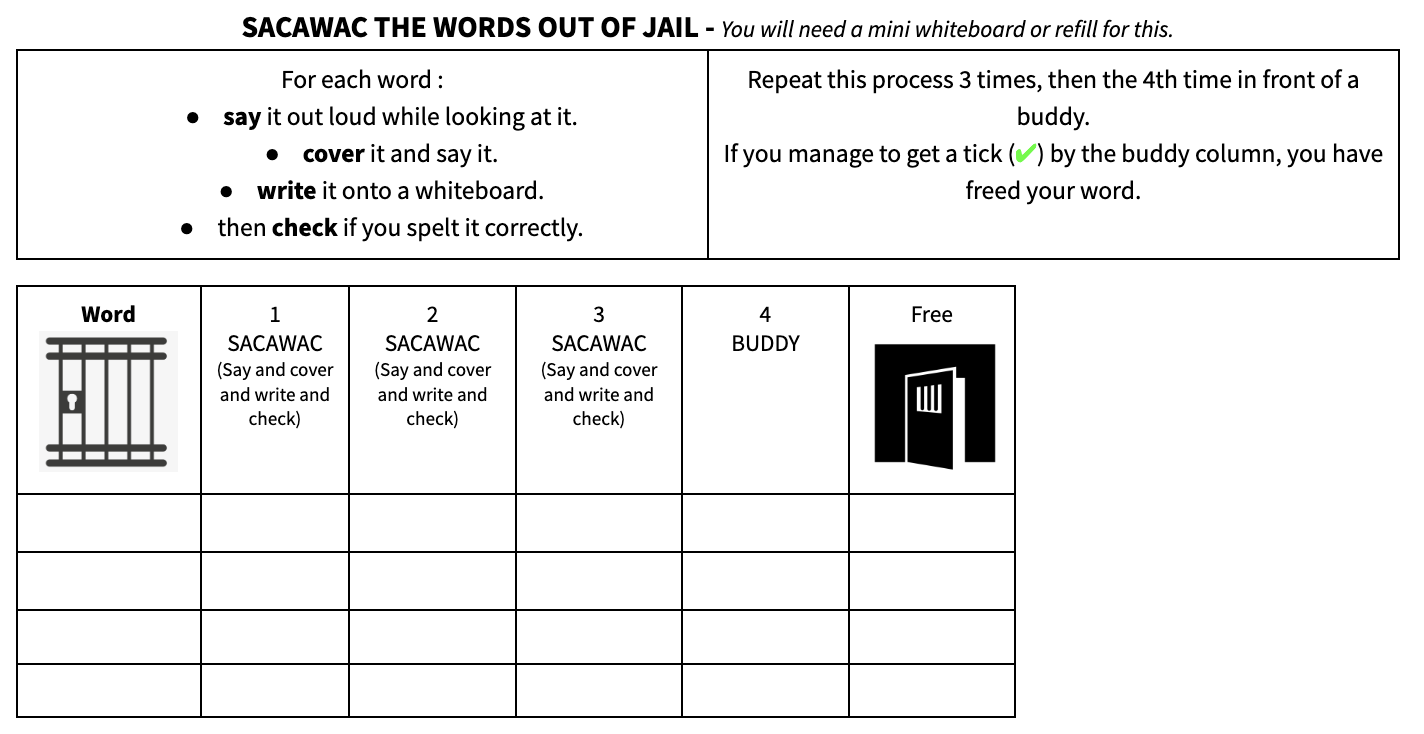
Our homework for the day was to engage our students in two word work activities. I chose to replicate the degrees of meaning task as well as the spotlight task. In our previous coaching conversation, my RPI mentor Robyn created an extension of the spotlight task that involves 'sacawac'ing words. The engagement and enthusiasm from the students were palpable, and it reaffirmed what the RPI course taught about the importance of equipping our learners with a robust vocabulary.
For both tasks, students needed to be in buddy groups. The RPI course explained that the conversations that happen in these spaces is actually where a lot of learning can take place! Here's a quick summary of the tasks I implemented aswell as the instructions the students received for them. All tasks are linked.
- Each take a turn to read out the word and both examples.
- Discuss which of the two examples best matches the word. Use your ground rules for talk to reach an agreement.
- Be prepared to take turns sharing the reasons for your groups’ choices when we come back together.
Monday, June 19, 2023
Vocabulary and Decoding - RPI
On Days 1-3 of the Manaiakalani Reading Practice Intensive we focussed on pillars 1 and 2: Planning for Ambitious Outcomes and Planning to Use Diverse Texts. Today we continued to focus on the second pillar, but with a more detailed analysis of Guided Reading. Regular and systematic Guided Reading offers particular benefits for teaching, observing and scaffolding learners to develop skills and strategies to better comprehend text with teacher support.
Dorothy started off the session discussing the Manaiakalani Kaupapa and Shared Pedagogy, especially in relation to reading and addressing the reading achievement challenge. The Welcome to School language metrics showed that many children in the Tamaki area start school with a developmental language level of 3-4 years, highlighting the need for vocabulary enrichment opportunities. What is important is that there are lots of chances to improve vocabulary.
Vocabulary plays a vital role in reading, and it's important to provide robust instruction to develop strong word knowledge. One key aspect is assessing students' prior knowledge and identifying any gaps that need to be filled. By giving students words beforehand, we can gauge what they already know and what areas we need to focus on. It's important to help students understand vocabulary in context, as it allows them to see how words are used and their meanings in different contexts. Making target words visible is essential, as it enables students to see, say, and write the words to reinforce their understanding.
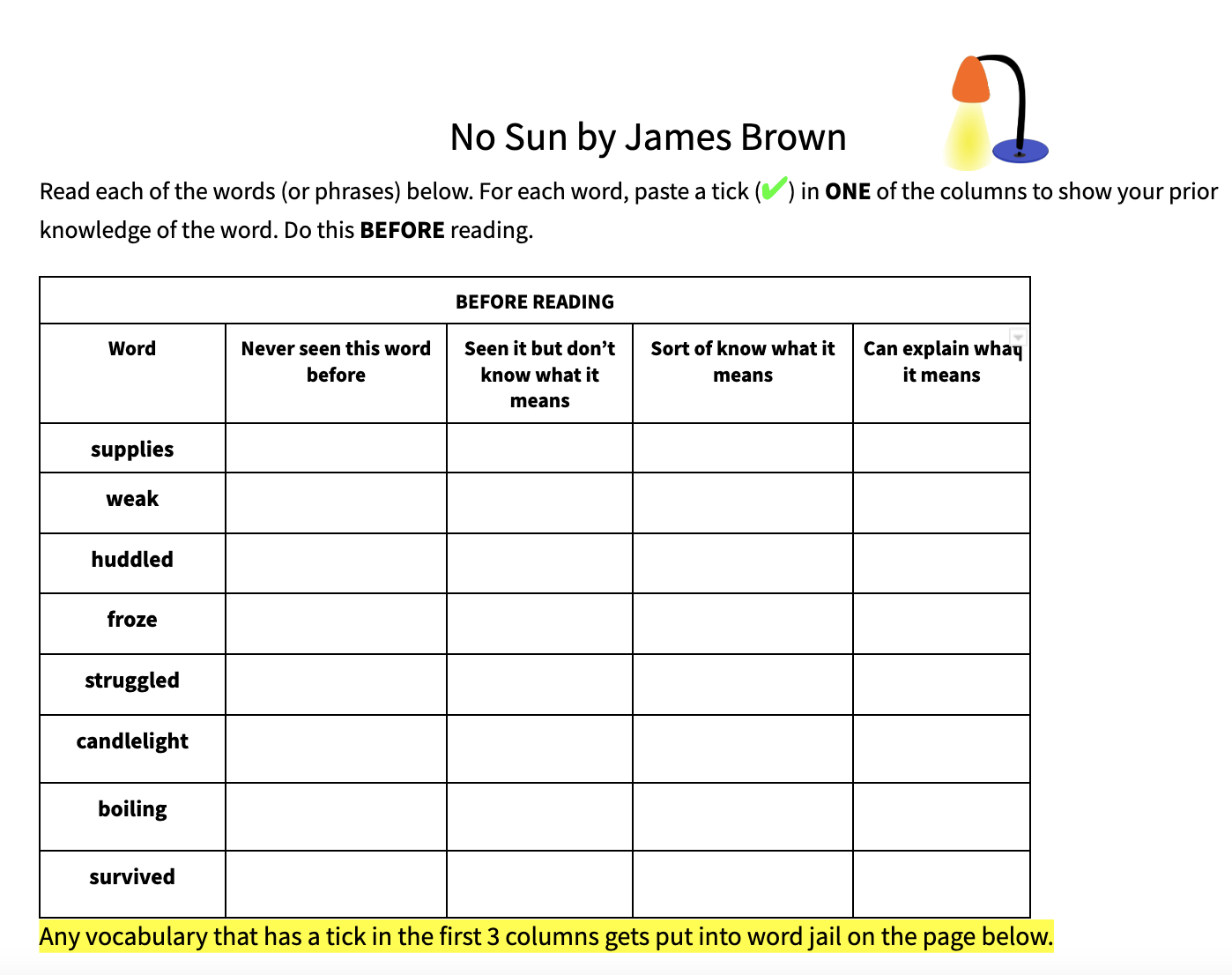
One task we did today was the "Spotlight" Word Knowledge Organiser. Currently, I write a list of vocabulary we need to understand before guided reading, and we discuss their meanings before we read. As we read, we tick the words however many times they are read. I plan to use the template linked in place of this.
What I found particularly interesting is that research shows that vocabulary knowledge accounts for a significant portion (80%) of the variation in reading comprehension scores. A learner's vocabulary serves as the strongest predictor of reading comprehension, and by Year 5, 70% of reading difficulties are related to vocabulary.
Additionally, reading comprehension is closely linked to oral vocabulary skills. It's essential to incorporate pronunciation practice when introducing new words during guided reading sessions. Currently, I often call out "I say, you say" to promote the pronunciation of new words to my akonga, but I definitely have room to become more explicit in teaching pronunciation. Word knowledge develops incrementally through repeated encounters, and can allows us to foster high-quality literacy learning experiences. My key work on for this can be summarised by these words : "Repetition without boring."
One of my key takeaways from the "Chalk 'n Talk" session with Naomi was : ALL students can benefit from high-quality vocabulary instruction. Words can be known to different levels of knowledge. This was a good reminder to me that : although it is said 'learning to read' transitions into 'reading to learn' by the time a student gets to senior school, even students who have a large vocabulary repertoire can enrich their knowledge in ways that make it more accessible and productive.
The biggest learning I am excited to take away with me is what I learnt about vocabulary instruction, specifically how it is crucial to select and teach Tier 2 words, which are less frequent but have wide applicability across various contexts and are more academically oriented. These words, such as "hilarious," "endure," and "compare," have a powerful impact on verbal functioning and contribute to precision and sophistication in language use. As learners are less likely to encounter Tier 2 words in everyday conversation, targeted teaching becomes essential.

RPI Day 5 Homework
This blog post is a reflection on the homework tasks assigned during the Manaiakalani Reading Practice Intensive. Day 5 focused on planning a reading programme, and challenged us to adjust our timetables, implement engaging lessons, and seek feedback from our mentors. In this blog post, I will share my homework, the changes I made to my timetable and independent activities, the exciting 'Great Beginnings' lesson I observed and carried out, and the valuable feedback I received.
Adjusting My Timetable and Independent Activities:
One of the key tasks was to review our timetables and make necessary adjustments. I discussed with my mentor ways I could better incorporate : read alouds, vocabulary work, and more purposeful follow up activities. I now make sure to read aloud in every guided session even if it is just a page or two. Something that has been working well that we have started doing, is using a smaller whiteboard to write down the key vocabulary that is in the group's text and guided reading doc. When we come across the vocabulary in the text, the students need to tick the word. This has helped them to make meaningful connections and I have seen the use of this vocabulary in other work. In regards to follow up tasks, we were told to focus on high expectation independent activities. I discussed with my mentor that I felt I had a habit of designing my follow up tasks almost "too specific" to the text, so I was unable to reuse them. After reflecting on this, I created templates that I am able to use across any curriculum, and for any text. This has helped the flow of lessons and class learning time.
Implementing a 'Great Beginnings' Lesson:
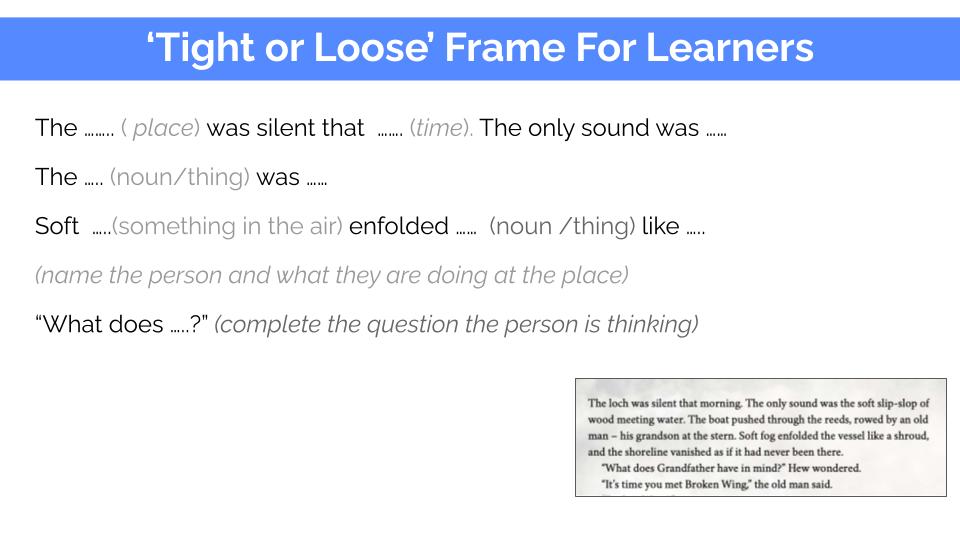
As part of the homework, I had the opportunity to observe Robyn conduct a 'Great Beginnings' lesson with one of my reading groups. My observation notes of this lesson are linked here. Robyn delivered a captivating lesson centred around exploring mood and atmosphere. After observing Robyn teach this lesson, I then recorded myself carrying it out. To scaffold their writing process, I provided a writing frame that guided their exploration of captivating opening lines. The lesson not only stimulated their creativity but also sharpened their awareness of the power of great beginnings in storytelling. Here is a link to the lesson we worked through. Here is a link to one of the student's published work (shared with permission.)
Seeking Feedback from my Mentor:
One thing I have learnt this year is that feedback plays a crucial role in our growth. To gain insights and improve my practice, I find conversations with my mentor to be very helpful. We discussed the changes I made to my timetable and independent activities, the 'Great Beginnings' lesson, and the overall impact on student learning. My mentor highlighted areas of strength and offering suggestions for further improvement. This process helps me to better support my students' progress.
Looking Ahead and Embracing Consistency:
As I reflect on my journey during the Manaiakalani RPI so far, I have realised that some changes are best implemented gradually. I reflected on how I feel like I have made many changes almost every second week to my reading programme. The reason for this can be linked to my first year of teaching where I am trying to find my feet, aswell as being exposed to so many amazing resources that I want to make use of. In considering the well-being and progress of my students, I have decided to maintain consistency in my teaching approach for the remainder of the term.
Tuesday, May 30, 2023
Teacher Inquiry - RPI Strategies
My teacher inquiry question for this year is :
Will implementing the RPI strategies have an impact
on reading comprehension?
This year I am a part of the Manaiakalani Reading Practice Intensive. It made sense to me for my teacher inquiry question to relate to what I learn and take away from this course.
When I began planning for my teacher inquiry question, I was first prompted to reflect on the my class' strengths and gaps according to their Term 1 test results and compare it to my own strengths as a teacher. This was useful to consider which areas I may need to develop and strengthen in my teaching practice. I chose reading as my area to focus on as it is a cluster and school wide focus to accelerate reading especially. Here is a link to the document with my reflections that led to the selection of my teacher inquiry question.
24 Hour Digital Footprint - Cybersmart Facilitation
During this week's Cybersmart session, I observed Mr Matt Goodwin teach a lesson about understanding the concept of a "digital footprint." The learning intention for the lesson was to help tamariki (students) comprehend the significance of their online presence.
The lesson began with watching a video, followed by a class discussion on the idea of a digital footprint. Matt drew upon everyday analogies, such as footprints in the sand or walking through mud and then entering a house, to help the akonga connect to this idea that their online actions have an impact. He also connected the concept to sponsorships and advertisements that people want to see, emphasising the importance of promoting ourselves in a positive way when we blog or share our work. I found that the analogies especially engaged the boys in this group.
Matt made effective use of getting students to "45" their screens between giving instructions and modelling. I realised I tend to forget to model things like making a copy of a document or "45ing" my screen because I assume the students will do so without being told to, so that is something I will be keeping in mind going forward.
The tamariki were instructed to open their browsing history from the past 24 hours using the shortcut Ctrl + H. This allowed them to reflect on what their online activities revealed about them. They were provided with a template to make a copy of, they then began the task of putting icons to represent the different websites they had been on in the last 24 hours.
I feel that this lesson invited my akonga to become active participants in their online lives. It also highlighted the significance of understanding and managing our digital footprints. By incorporating relatable analogies, encouraging self-reflection, and promoting positive online presence, Matt reminded the tamariki of the tools they can use to navigate the digital world responsibly. This lesson will become one I can refer back to when talking about cyber safety to the children.
Here are some links to students' blog posts after the session :
Monday, May 29, 2023
Planning a Reading Programme - RPI
Day 5 of the Manaiakalani Reading Practice Intensive saw us delve into the intricacies of planning a reading programme.
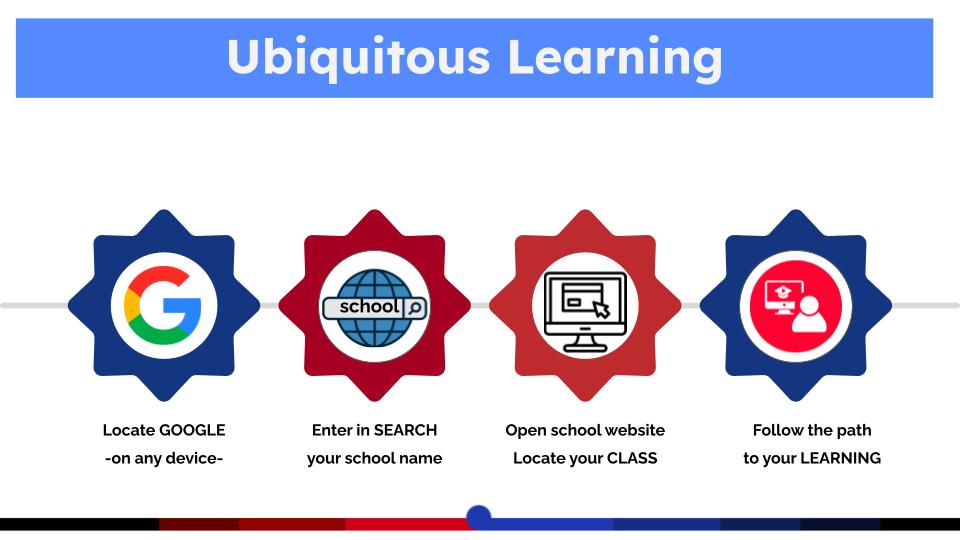
Mrs Burt started us off by discussing how “ubiquitous learning” is the idea that students should be able to access their learning. She led into how our web page for reading should adopt the key design affordances of any other learning area, including :- Organisational efficiencies
- Navigational ease (user friendly)
- Multi modal engagement factors
- Visible learning
- Rewindable instructional design
Key features in reading site design should include :
- Groups
- Engages interest (the hook)
- Multimodal
- Learner and whanau friendly
- Instructions
- Current learning on top
- Historic learning accessible
- Teacher notes
Then the actual learn create task part should include :
- Learning intention
- Texts
- Learning activities
- Reference material
- Management of your space while you are teaching
- Enables learners to have choice
- Enables learners to collaborate
- Fits in all the other important ‘bang for buck’ learning experiences
- Empowers learners to be active participants in the learning process
One of my highlights from the session was when Naomi discussed the powerful connection between reading and writing. We learned how reading can be leveraged to improve writing skills and ignite our students' passion for written expression. Naomi introduced us to the concept of "writing like readers" and emphasised the importance of exposing students to exemplary writing to inspire their own creativity and style.
During the session, Naomi introduced a technique using a 'writing frame.' We were encouraged to imitate a part of the story we had just read, tapping into the stylistic features of the author's work.I also appreciated the skill builder session where the focus was on inference and how we can teach it to our learners. This is a big work on my students have this term and is also something I discuss lots with my mentor teacher. What I learnt from this session that I will be taking forward with me :
- Explain inference for learners in a student-friendly way and model examples (e.g. default inference vs reasoned inference)
- Use the metalanguage (e.g. implied, implicit, inferred; local; global; reasoned)
- Explain why authors and thinkers use inference
- Balance direct instruction and authentic encounters
- Well crafted question-answer practice has been found to be as beneficial.
A small gem I also found today was "the learning pit." We quickly discussed how it may be beneficial to teach students that it is a very normal thing.
Today has also given me a very clear next step. I am now working towards consistently tracking and monitoring how far my learners get in their independent activities. Thank you to the RPI team for today - I am excited to implement what I have learnt today especially in terms of integrating reading and writing, as well as making use of the extensive features of digital apps like Epic and Literacy Planet.
Guided Reading - RPI Day 4
Day 4 of the Manaiakalani Reading Programme Intensive (RPI) focused on the practice of guided reading and its impact on student learning. Here are some of my key takeaways from the session :
Regular and systematic guided reading is an important part of any successful reading program. It offers dedicated time for students to engage in comprehension activities and develop their reading skills. The RPI presented research that is very clear : explicit teaching of reading matters, particularly for struggling readers. By providing consistent opportunities for students to read and learn about reading, we empower them to become confident and proficient readers.
Guided reading, credited to the influential work of Marie Clay and further developed by Fountas & Pinnell, offers a structured framework for instruction. It involves carefully selecting texts and tailoring instruction to meet students' needs. We explored the importance of preparation, introducing texts and their purpose, observation, fostering meaningful discussions, identifying teaching points, engaging in word work, and promoting consolidation and independent follow-up. These steps can create a well-rounded guided reading session that supports student growth and comprehension.
Teacher Inquiry - Reading Comprehension
This term, my teaching inquiry continues to focus on improving reading comprehension for my Year 7 and 8 students. Following a recent lesson...
-
Link to RPI website. Tuesday the 14th marked the first of nine sessions I will be attending as part of the Manaiakalani Reading Programme In...
-
Now that we are coming to the end of another school year, it is time to reflect on my journey using The Code to enhance spelling and phonics...
-
This year in LS1, our maths programme focused on building strong foundations in number knowledge and strategies, helping my Year 6 students ...