Showing posts with label wordwork. Show all posts

Sunday, October 8, 2023

Teacher Inquiry - Vocabulary

After discussing my backwards mapping with my senior syndicate in Term 2, one of the things I had planned to do was to have a visual display for vocabulary and draw the students' attention to it.  Below is an image of what my whiteboard would typically look like before starting our reading programme for the week.  

Alongside the tasks for the week, I would write the list of words the students would need to 'SACAWAC.'  You can click here to read more about SACAWAC.  At the start of a guided reading session I'd sometimes get the group to make predictions about the text based only on the word list.  As a result of the SACAWAC activity, students began challenging me to test their spelling ability.  From this, our reading programme grew to include a spelling test every second session - after the students had time to SACAWAC the words.  I have made the spelling lists incorporate vocabulary from the texts they read, as well as vocabulary that have similar patterns to words they may come across in their Peter Schonell Spelling Test.  

How the students responded : 

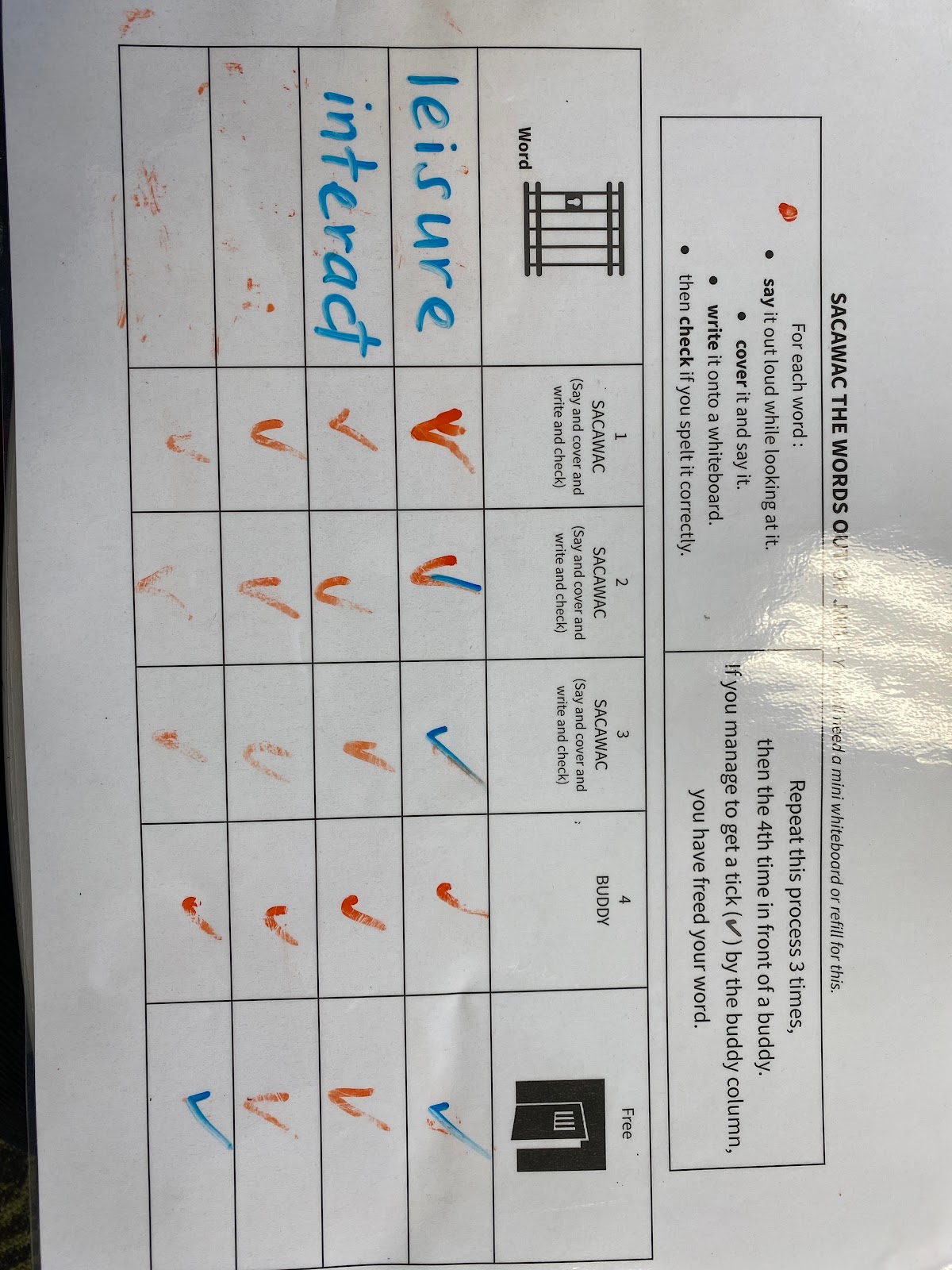
I feel the students have engaged with this approach to teaching word consciousness / kupu hou.  They are eager to participate in SACAWACing words and spelling tests as they feel a sense of ownership over that part of our reading programme.  They have shown they prefer to do their spelling and marking on paper so that is what we have implemented.  After a spelling test, any words the students got wrong - they had the option to continue to SACAWAC those for homework or when they had completed their other work.
What worked : 

Having a physical copy for students to write on.  This proved more effective than students who just copied and pasted ticks into their Google Docs.  Having a different list for each group - this allowed them to become 'experts' at the particular set of words and the students began teaching others the meanings of the words without being prompted.  Some of the vocabulary has also begun to show up in their writing which has been awesome to see.  Having a spelling test the next day also served as a good purpose for them to be doing the SACAWAC activity and sharing their results with them helped build confidence and a desire to do better.

What I could change : 

I could make an actual wall display of all the topical vocabulary instead of just writing it on the whiteboard.  I am yet to try this as I find the turnover between words could be too much for them to feel like they need to memorise.  I could also do more with their results for spelling as at the moment they just receive a certificate for spelling.  At the moment I store their spelling results in my reading workbook where I can see if/how they improve over the weeks.


Tuesday, July 25, 2023

Word Work - RPI Homework

Day 6 of the Manaiakalani RPI course brought us valuable insights into vocabulary and decoding, two critical aspects of fostering strong literacy skills in our students.  You can read more about Day 6 here.

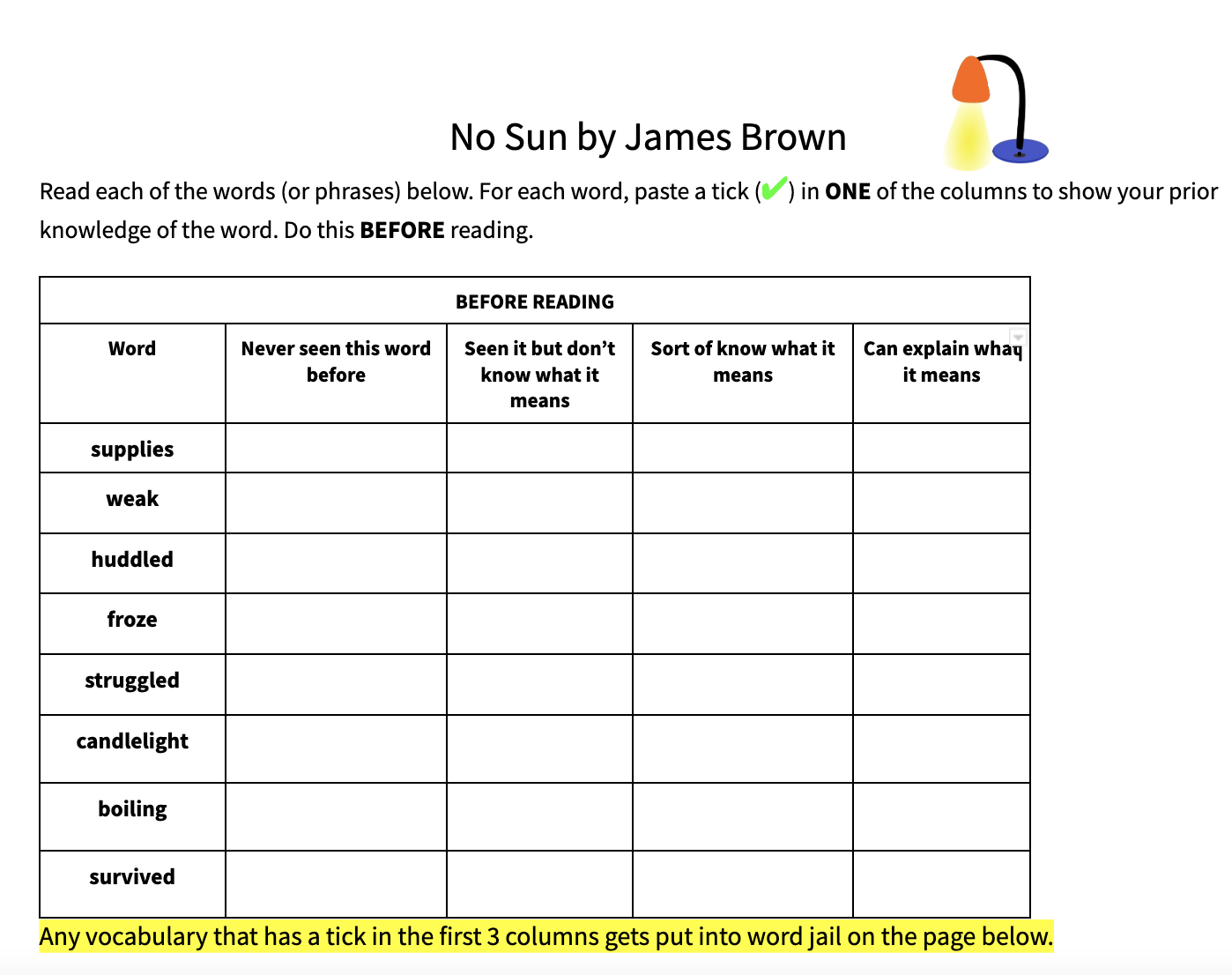
Our homework for the day was to engage our students in two word work activities.  I chose to replicate the degrees of meaning task as well as the spotlight task.  In our previous coaching conversation, my RPI mentor Robyn created an extension of the spotlight task that involves 'sacawac'ing words.  The engagement and enthusiasm from the students were palpable, and it reaffirmed what the RPI course taught about the importance of equipping our learners with a robust vocabulary.

For both tasks, students needed to be in buddy groups.  The RPI course explained that the conversations that happen in these spaces is actually where a lot of learning can take place!  Here's a quick summary of the tasks I implemented aswell as the instructions the students received for them.  All tasks are linked.

Degrees of meaning : 

  1. Each take a turn to read out the word and both examples.
  2. Discuss which of the two examples best matches the word. Use your ground rules for talk to reach an agreement.
  3. Be prepared to take turns sharing the reasons for your groups’ choices when we come back together.

For this task, we also discussed relevancy of vocabulary to the context of the story.  We talked about how some words can different meanings depending on the context they are in, so it is important to take that into account when we learn new vocabulary.  My students enjoyed working in partners for this task and could all find success in completing this task as they could all complete this task and give an explanation for their decisions.

Instructions the students receive : 
1. Read each of the words (or phrases) below.
2. For each word, paste a tick (✔) in ONE of the columns to show your prior knowledge of the word.
3. Do this BEFORE reading.

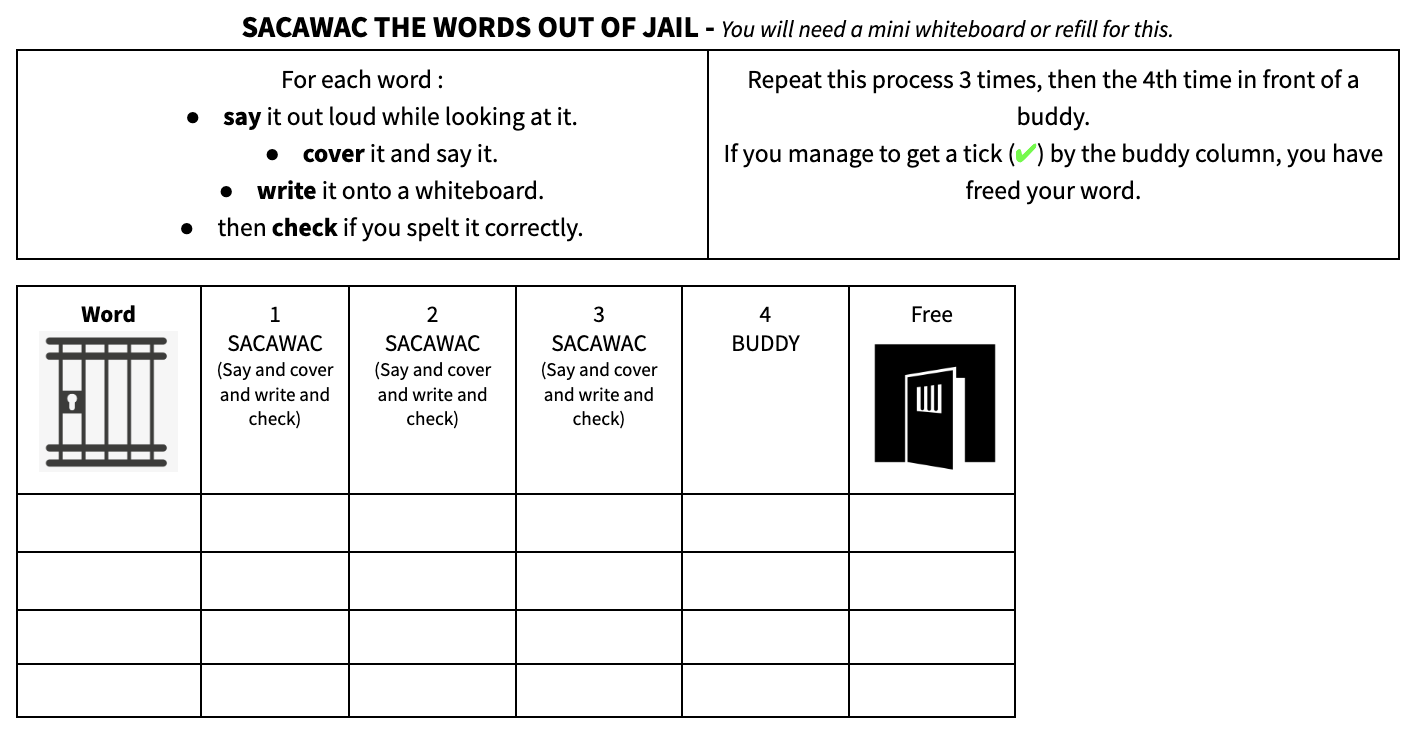
Extension of the spotlight task - SACAWAC
Robyn suggested a possible extension I could make to the spotlight task could be where students need to SACAWAC the vocabulary.  Any vocabulary the students could not explain the meaning of, they needed to put into 'Word Jail.'  The only way to get them out, is to SACAWAC them.  What it means to SACAWAC : Say and cover and write and check.  For each word students had to : say it out loud while looking at it.  Cover it and say it. Write it onto a whiteboard.  Then check if they had spelt it correctly.  They thoroughly enjoyed this activity.

Since we first tried the spotlight and SACAWAC tasks last week, my students have been eager to show me their ability to spell their new vocabulary and have since suggested that I could test them on it. We have now set up our reading lessons so that our second reading session in a week (after we have SACAWAC'd words), I run a quick spelling test with that specific vocabulary in our small groups.  The vocabulary that is in this spotlight/SACAWAC activity, is the vocabulary they are tested on.  This has been lots of fun and has definitely improved my students' confidence in writing as well as their eagerness to expand their vocabulary.

For the purpose of the RPI homework, I facilitated these activities in small groups to make sure my students understood the task and how to complete it.  Going forward, I will make most of them independent tasks they complete before they see me or after.  I am looking forward to going through the RPI resource register to see what else I can use for my learners.

Teacher Inquiry - Reading Comprehension

This term, my teaching inquiry continues to focus on improving reading comprehension for my Year 7 and 8 students. Following a recent lesson...