Showing posts with label reflection. Show all posts

Monday, October 7, 2024

What is the SAMR Model?

Exploring the SAMR Model

Before completing my own research, I had not heard of the SAMR model before, so I broke it down and created a my own DLO to understand it better. It’s a framework that helps evaluate how technology is used in teaching, moving from simple substitution to transforming learning experiences.

SAMR stands for Substitution, Augmentation, Modification, and Redefinition—a progression that shows how technology can enhance and transform learning.

In my practice, I would like to think that I often work in the Modification and Redefinition stages, redesigning tasks with multimedia or flipped learning to make them more engaging. This aligns with the Manaiakalani cluster’s "Learn, Create, Share" approach, helping students learn in innovative ways.

Friday, September 27, 2024

Teacher Inquiry - Reflection 2

Term 3 has been full of learning and growth, not just for my students, but for me too. I’ve noticed some shifts in both my teaching and the way the students are approaching spelling and phonics.

Changes in My Teaching:
This term, I focused more on differentiating my lessons. Breaking the students into smaller groups meant I could give more tailored support to those who needed it most. I also started to use more gamified activities and made my lessons more dynamic to keep everyone engaged. The data tracking also helped me a lot – by checking their progress regularly, I could tweak my teaching on the spot if things weren’t working.

Changes in My Students:
I’ve seen so many improvements! Many of my students, especially the ones struggling early in the year, have gained confidence in identifying phonics patterns and applying them to their spelling. They now know more about vowel sounds and blends, which is awesome to see.

However, some of the students still slip back into old habits when they write independently, and I often need to remind them of the strategies we’ve worked on. But overall, there’s been a noticeable change in how they approach their work – they seem more confident and motivated.

What’s Next:
Looking ahead, I’m planning to keep working on the foundation we’ve built this term. I’ll make sure the students who still need more support get the time they need to consolidate their skills. I also need to balance the repetition with more variety to keep all the students challenged and engaged.

Monday, February 26, 2024

Term 1 2024 Goal & Reflection


My Term 1 Goal:
Strengthen Class Connections – Build a positive and inclusive classroom culture by fostering strong relationships with students, encouraging teamwork, and setting clear expectations for behaviour and learning.

Why : As we begin the school year, it's important to me to build a foundation of trust and community within my classroom. Strong connections among students first of all create a safe and supportive learning environment, which is probably the most successful thing I could achieve as a teacher.  It also encourages collaboration, and boosts engagement and academic success. I want each student to feel valued, heard, and part of a team, where they can express themselves without fear of judgment.

What I Plan to Do: To achieve this, I am planning to begin the term with team-building activities that help the students get to know each other better.  We are also quite blessed in that this will be our second year together as a class as well as with me as their teacher - so I have an advantage in that I know a lot about my students already.  We will do low stakes icebreakers, group games, and share personal stories to help everyone find common ground. I will also introduce clear and consistent classroom expectations around respect, responsibility, and kindness. As the term progresses, I hope to remember to continue to reinforce these values through daily interactions and class discussions, making sure students know they have a voice in shaping our learning space.

EDITED WEEK 10 TERM 1 2024*

Reflecting on my Term 1 goal of strengthening class connections, I’m really happy with how things have gone. The students are more confident in sharing their ideas and have started seeing learning as something fun rather than something they have to do. It’s great to see them working with classmates they wouldn’t normally choose, which shows they’re starting to connect more with everyone.

Our reward system has also worked well since we switched from individual rewards to group-based ones. The table groups are more motivated, and they’re really putting in more effort. The class voting on rewards has helped them feel more involved and invested in the process. Also, the allocated seating has been better for focus and has helped students work with different people.

Overall, I’m happy with the progress we’ve made in building a positive and supportive classroom environment. I’m looking forward to seeing how these connections grow in the next term.

Thursday, February 22, 2024

Same But Different - 2024

As an educator, the classroom is not merely a space for lessons but an environment that plays a pivotal role in shaping students' experiences. Last year, I found myself in a MLE space, sharing a class of 60 students with another teacher spanning across years 4, 5, and 6. This year, the transition to teaching only Year 6 students has presented a unique opportunity to redefine and revamp the learning space to better cater to their specific needs.

One of the first challenges was to make the space feel new for the returning Year 6 students. The classroom layout plays an important role in fostering a conducive learning environment. I divided the space into two zones to cater to different aspects of our daily routine. One side is dedicated to formal learning, with organised desks and a clear focal point for lessons. The other side now serves as a flexible breakout space, providing a comfortable setting for roll calls, whole class discussions, and things that require more space such as mindfulness or drama.  It also serves as a space students "work towards" sitting in for independent tasks.

Beyond the physical transformation of the space, it has been equally important for me to communicate a shift in expectations and behaviour from last year. While the memories of some less-than-ideal moments lingered, I approached this with a focus on positive change.  During our first day together, I took a moment to address the akonga with sincerity. I expressed my belief in their ability to rise above past challenges and assured them that this year was a fresh start for everyone. By acknowledging the past without dwelling on it, I hope I have set a tone of optimism and understanding. The physical changes to the space served as a tangible reminder that this is indeed a new year.

To instill a sense of belonging and ownership among the students, we got to work straight away - displaying their projects, and artwork.  It has not only boosted their confidence but also created a positive and collaborative atmosphere where everyone feels valued.  Expecting manuhiri in Week 3 was a good motivator for this also.

Pictured is my former principal Mr Burt and I during a Manaiakalani Principals' Visit to my kura.  I took great pride in welcoming him and the other manuhiri to our space - and I was especially proud to see my students taking ownership of our class, offering to show our visitors their different mahi around the classroom.

As the year progresses, I hope it becomes evident that my akonga have embraced this new beginning.  I want them to understand that their actions will shape the character of our shared space.  Kia ora 2024!

Sunday, November 5, 2023

EOY Teacher Inquiry

Now that the summative assessments for the year are approaching completion, I am able to use my results and data to answer my Inquiry Question : Has implementing the RPI strategies had an impact on reading comprehension?

Yes, implementing the RPI strategies has had an impact on my students' reading comprehension results.  In the slides below, you will find my target students' data from both Timepoint 1 (Term 1) and Timepoint 2 (Term 4).  It also includes what I did, why I did it, what I think worked well vs didn't, as well as my own analysis of the data.  

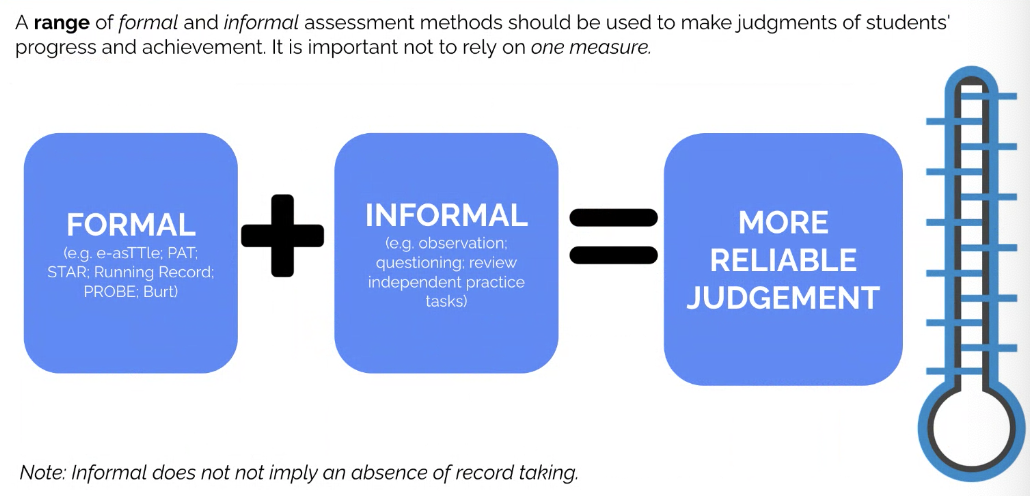
My data shows that 14% of the students in my target group maintained the same PROBE reading age, while 86% of students improved their reading age  between Timepoint 1 & Timepoint 2.  Unfortunately, 43% of students shifted backwards in stanine levels between the Term 1 & Term 4 PAT tests.  15% of students maintained the same stanine level.  43% moved forward in their stanine level.  While 33% of students maintained the same score, 67% of the students in my target group improved their Peters Spelling scores.  7/8 of my target students record a higher self efficacy in reading now then they did in Timepoint 1. 

A personal highlight of mine is that 7 out of my 8 target students now have a reading age that is at or above their actual age.  Going forward, I am thinking about what I can do to raise or at least maintain my students' PAT Stanine level from Timepoint 1 to Timepoint 2.

Monday, September 11, 2023

Sharing - RPI

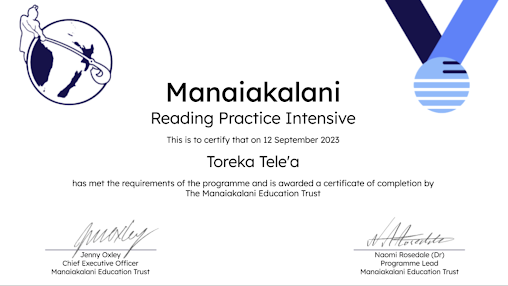
In the world of education, sharing is a fundamental aspect of the learning process. It bridges the gaps between individuals, fostering connections, and creating a sense of community. In the Manaiakalani Reading Practice Intensive (RPI), sharing takes center stage as a powerful tool for enriching the reading experience of young learners. Today, we delved into the different facets of sharing and its significance in the context of reading education especially in the Manaiakalani cluster and network.  Today was also the last session of RPI for my cohort.

Dorothy started by acknowledging how as educators, we often find ourselves pressed for time, and sharing is the component that sometimes gets squeezed out of our routines. It's important to recognise that sharing is a force that brings people together. It is an essential part of our humanity, allowing us to connect on various levels.  

Sharing extends beyond the classroom, reaching an authentic audience that chooses to engage with our thoughts and ideas. This audience can include peers, classmates, the school community, families, and even the broader global community. In today's digital age, blogging has become the primary online space for young people to share their thoughts, experiences, and learning journeys.  Student blogs serve can serve as rich sources of information. Their blogs acts as a digital archive, preserving their written work and showcasing their reading and other interests.

Teachers play a pivotal role in the blogging process. They should actively engage with and co-read blogs alongside their students. By doing so, they formatively assess students' progress and provide valuable feedback. Student blogs serve as records of their reading journey, including learning intentions, personal responses to texts, and evidence of comprehension. This information is particularly useful for new learners at the beginning of the school year.

Moreover, sharing on blogs transcends the linear process of learning, creating a dynamic cycle of learn, create, and share. It emphasizes that both the process and the product of learning are equally important. When students share their finished work, they reinforce the feeling of accomplishment. Additionally, sharing stimulates new thinking, often triggered by comments and questions from readers.

While class sites and class blogs are primary online spaces for learners, teachers also use them to share their reading program designs with other educators. This sharing process enables the visibility of program routines and innovations, allowing teachers to learn from one another. It's like having a set of favorite teachers to "stalk" regularly for inspiration and ideas.

Planning for Share
The success of sharing in reading education requires careful planning. To ensure its effectiveness, teachers must consider several factors, including :
  • Encouraging spontaneity without stifling enthusiasm.
  • Inspiring students to share items of their own interest.
  • Creating an easily recognizable icon that prompts students to blog.
  • Monitoring the completion of sharing activities.
  • Defining priority reading-related learning that learners should post to their blogs weekly.
  • Setting clear learning goals and aligning posting schedules with students' availability.
  • Promoting audience engagement through comments and discussions.
  • Prioritizing content quality over quantity.
  • Allowing time for reflection and revision.
  • Establishing a feedback loop for constructive feedback on posts.
  • Encouraging diverse content formats and topics to keep blogs engaging.
Providing effective feedback is crucial for growth in reading education. Feedback can be evaluative (summative), descriptive (formative), or generative (formative). Research shows that descriptive feedback with generative elements is more effective than evaluative feedback.

Teachers should plan and scaffold peer-to-peer feedback, helping students understand what they need to learn, where they stand in their learning journey, and what their next steps should be. Effective descriptive feedback should focus on the learning intentions or goals of the task.

To create a holistic reading experience, it's essential to involve students' families. Deliberate efforts should be made to connect with families and engage them in reading activities. Some strategies include:
  • Reinforcing ways for students to take books home and involve their families.
  • Encouraging families to participate in reading challenges.
  • Soliciting recommendations for texts from families.
  • Creating spaces for family feedback and involvement in reading activities.
Sharing is not just an activity; it's a way of building connections, fostering growth, and enriching the reading experience. I feel that today's session was a fitting end to the 9 sessions we've had for RPI this year.  I am very thankful to the RPI team for the work they put into designing and facilitating our programme.  I have come away from each session with so much new knowledge and many ideas I am always excited to implement.  Thank you to the RPI team, my RPI mentor and my school for signing me up to participate in this year's RPI course.  Ngā mihi nui.


Wednesday, August 2, 2023

Teaching for PB4L

As educators, creating a positive learning environment is crucial. At Panmure Bridge, we are a PB4L school.  This means we teach for positive behaviour for learning.  Teaching for positive behaviour lays the foundation for an empowering classroom where students thrive academically and emotionally. As a beginning teacher, I recognise that I have much room to grow in terms of intentional and deliberate acts of teaching that reflect this.

  • Setting clear expectations for behaviour and reinforcing positive actions is crucial. Recognising students' efforts and celebrating their achievements helps foster a positive and encouraging atmosphere.
  • Being a role model for students and encouraging self-reflection supports their personal development.
  • Integrating social-emotional learning and restorative practices equips students with valuable life skills.
  • Open communication with students and parents builds a strong partnership. Collaborating with all groups involved can enhance the sense of unity and shared responsibility.
One aspect of PB4L I will need to explicitly work on is providing feedback and fair consequences for problem behaviour.  Understanding the different response strategies will be especially important : prompting, redirecting, reteaching, conversing with students and providing choice.

Tuesday, July 25, 2023

Word Work - RPI Homework

Day 6 of the Manaiakalani RPI course brought us valuable insights into vocabulary and decoding, two critical aspects of fostering strong literacy skills in our students.  You can read more about Day 6 here.

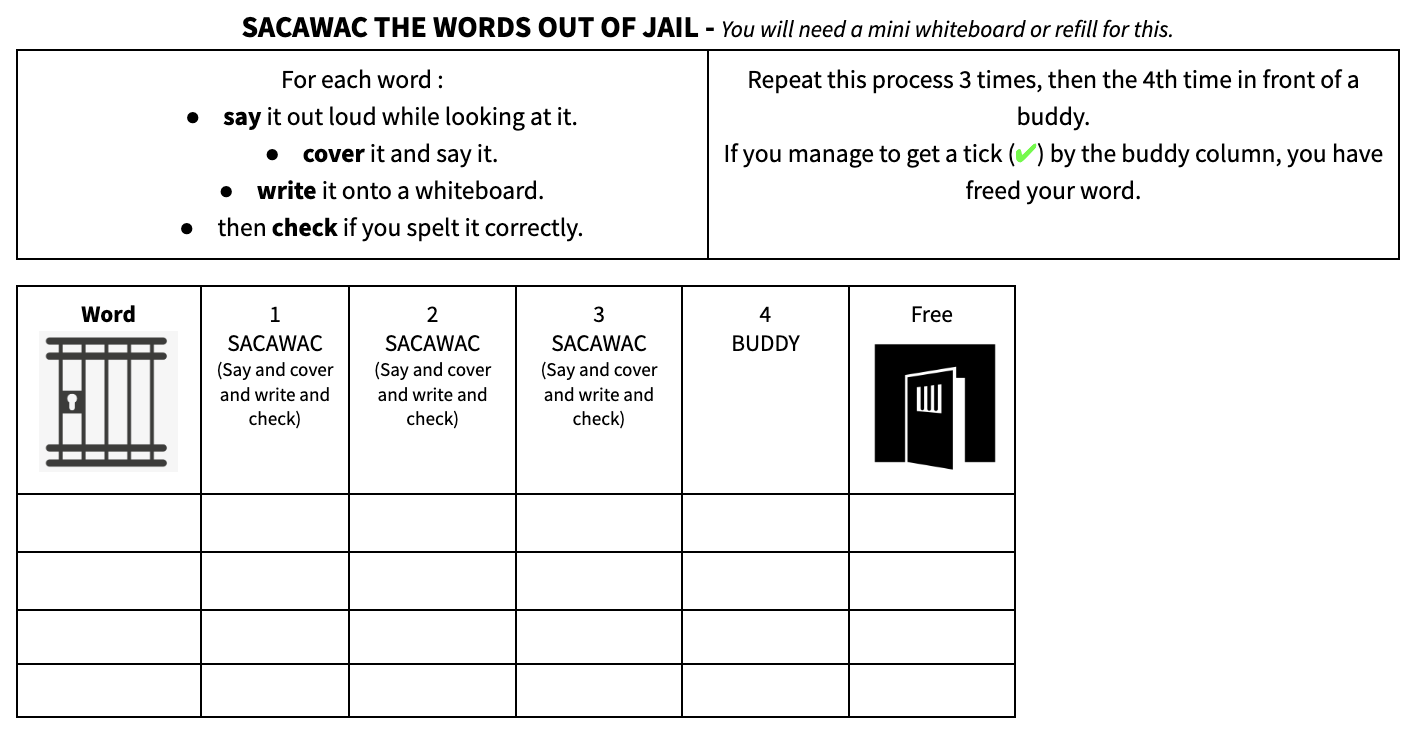
Our homework for the day was to engage our students in two word work activities.  I chose to replicate the degrees of meaning task as well as the spotlight task.  In our previous coaching conversation, my RPI mentor Robyn created an extension of the spotlight task that involves 'sacawac'ing words.  The engagement and enthusiasm from the students were palpable, and it reaffirmed what the RPI course taught about the importance of equipping our learners with a robust vocabulary.

For both tasks, students needed to be in buddy groups.  The RPI course explained that the conversations that happen in these spaces is actually where a lot of learning can take place!  Here's a quick summary of the tasks I implemented aswell as the instructions the students received for them.  All tasks are linked.

Degrees of meaning : 

  1. Each take a turn to read out the word and both examples.
  2. Discuss which of the two examples best matches the word. Use your ground rules for talk to reach an agreement.
  3. Be prepared to take turns sharing the reasons for your groups’ choices when we come back together.

For this task, we also discussed relevancy of vocabulary to the context of the story.  We talked about how some words can different meanings depending on the context they are in, so it is important to take that into account when we learn new vocabulary.  My students enjoyed working in partners for this task and could all find success in completing this task as they could all complete this task and give an explanation for their decisions.

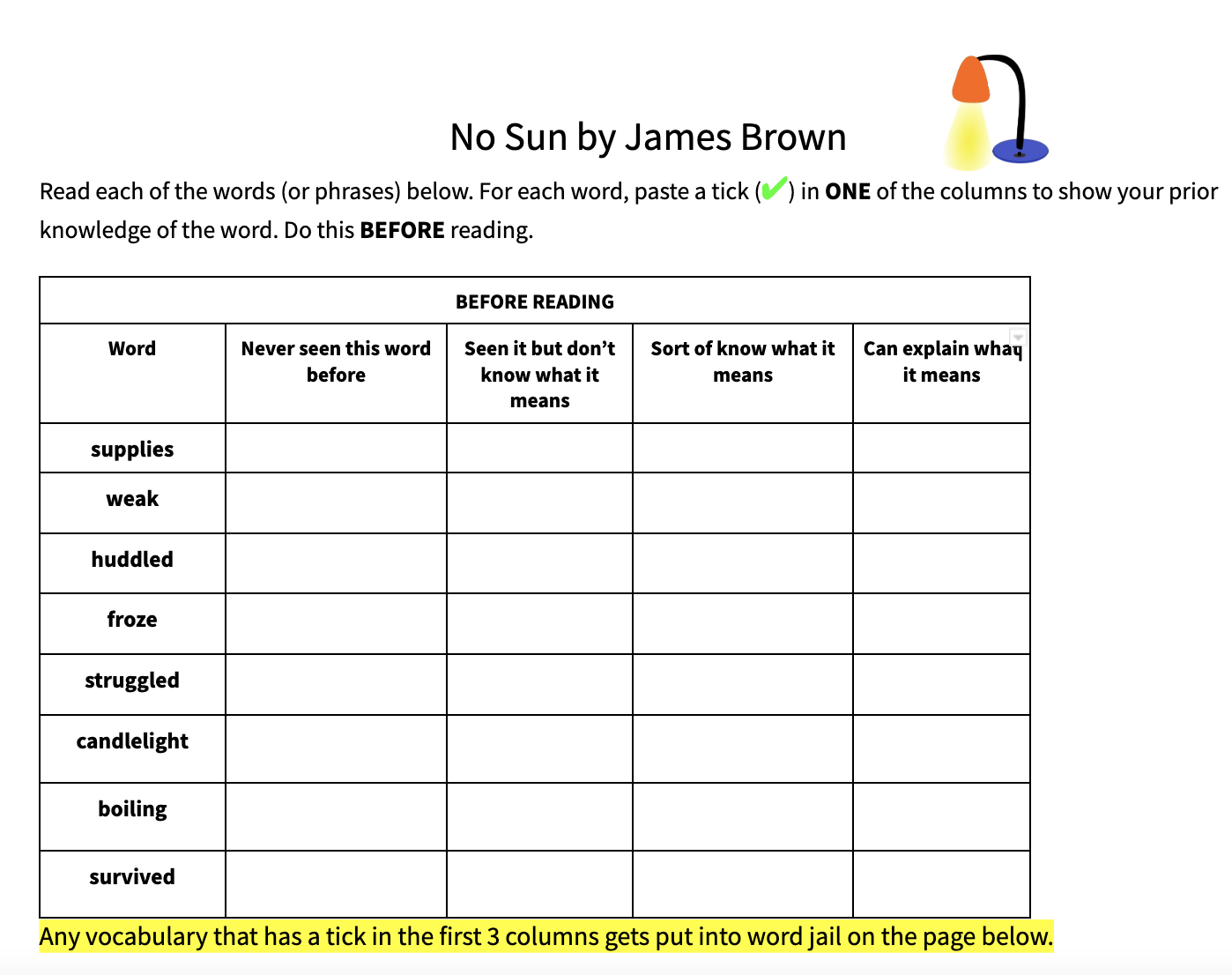
Instructions the students receive : 
1. Read each of the words (or phrases) below.
2. For each word, paste a tick (✔) in ONE of the columns to show your prior knowledge of the word.
3. Do this BEFORE reading.

Extension of the spotlight task - SACAWAC
Robyn suggested a possible extension I could make to the spotlight task could be where students need to SACAWAC the vocabulary.  Any vocabulary the students could not explain the meaning of, they needed to put into 'Word Jail.'  The only way to get them out, is to SACAWAC them.  What it means to SACAWAC : Say and cover and write and check.  For each word students had to : say it out loud while looking at it.  Cover it and say it. Write it onto a whiteboard.  Then check if they had spelt it correctly.  They thoroughly enjoyed this activity.

Since we first tried the spotlight and SACAWAC tasks last week, my students have been eager to show me their ability to spell their new vocabulary and have since suggested that I could test them on it. We have now set up our reading lessons so that our second reading session in a week (after we have SACAWAC'd words), I run a quick spelling test with that specific vocabulary in our small groups.  The vocabulary that is in this spotlight/SACAWAC activity, is the vocabulary they are tested on.  This has been lots of fun and has definitely improved my students' confidence in writing as well as their eagerness to expand their vocabulary.

For the purpose of the RPI homework, I facilitated these activities in small groups to make sure my students understood the task and how to complete it.  Going forward, I will make most of them independent tasks they complete before they see me or after.  I am looking forward to going through the RPI resource register to see what else I can use for my learners.

Tuesday, June 27, 2023

Austin's Butterfly - Feedback and Feedforward

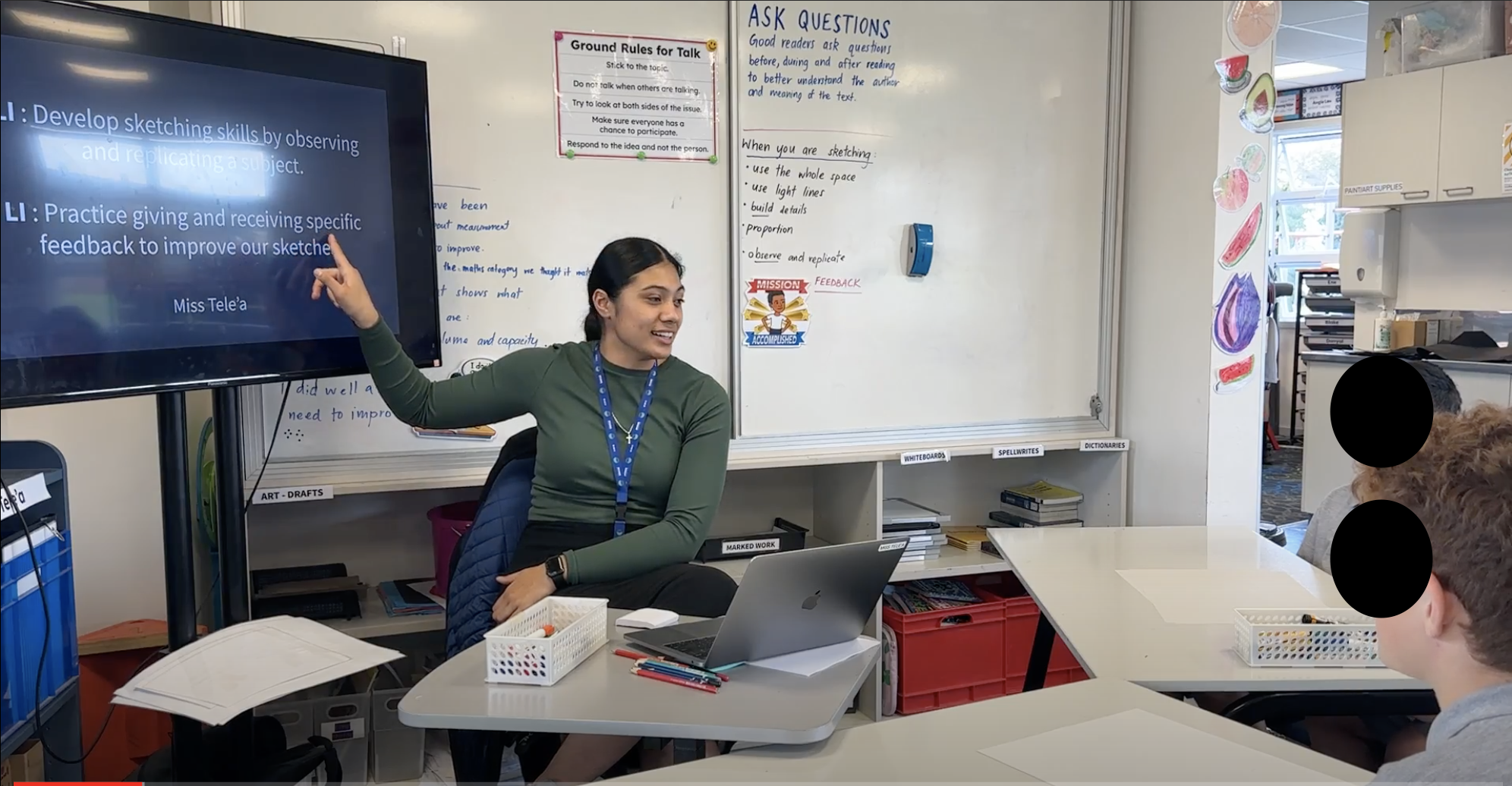
 Recently I conducted the first part of an art lesson with 3 of my target students. Our focus was on developing sketching skills through the use of specific feedback.  I modelled this lesson after being shown "Austin's Butterfly" by my mentor teacher.  This was very useful having something to watch and draw from when creating my own lesson for my akongā.  Reflecting on my own notes and the feedback from my mentor who observed the lesson, means I can gain valuable insights into the effectiveness of my instructional strategies.


To begin the lesson, I reminded the students about the importance of following our ground rules for respectful conversation, which were prominently displayed. This served as a helpful reference point throughout the lesson.

  • The learning intentions (LI) for the lesson were twofold: to develop sketching skills by observing and replicating a subject, and to practice giving and receiving specific feedback to improve our sketches. I made sure to clarify these intentions at the outset and provided the necessary materials such as A5 paper, pencils, and a reference image of a monarch butterfly.
  • To engage the students in a discussion about feedback, I asked them what it meant when someone gives their "2 cents" in a conversation. This question prompted pairs of students to share their thoughts and then share their responses with the whole class. I captured their ideas on the board, ensuring that their voices were heard and acknowledged.
  • The main video activity involved watching "Austin's Butterfly," a story about a first-grade student who receives feedback on his artwork. I challenged the students to pay attention to what effective feedback looks like during the video. They used newsprint to record their observations.
  • After watching the video, I guided the students through a sketching exercise. I encouraged them to draw from memory, emphasising the importance of using the whole space, observing carefully, using light lines, building details, and considering proportion. I provided a visual example to illustrate the concept of proportion.
  • To co-construct success criteria for effective feedback in art, I asked the students what they believed promoted growth and improvement. Their answers were transcribed on the board. We concluded that feedback should be specific, respectful, and actionable.
  • The lesson concluded with a feedback activity, where students were assigned partners and given sticky notes to provide feedback to each other. I encouraged them to use the sentence frame, "I really like how you ________. Next time, you could try ________ to make it even better." This structure aimed to promote constructive and supportive feedback.

In retrospect, I acknowledge the strengths and areas for improvement in the lesson. The engagement level was high, and the use of visual aids, such as the video and example sketches, enhanced the students' understanding. However, I could have provided more visual prompts throughout the lesson, such as displaying the monarch butterfly image earlier.

In future lessons, I will make more deliberate connections to prior learning, and make sure that new concepts can be connected to the students' existing knowledge.  One thing we noticed was that I talked "about" feeding forward, but I never once actually referred to it as "feedforward." This comes down to being explicit with the words I use when teaching a group.  I need to use the words I want my students to use.  Additionally, I will try to use terms such as "learning intention" and "success criteria" more explicitly to enhance student understanding.

Overall, the feedback from my mentor and my own reflections will guide me in refining my teaching strategies. I appreciate the suggestions to make feedback a weekly focus and to continually seek examples of how I can improve my lessons. By implementing these recommendations, I am confident that I will create even more meaningful and effective learning experiences for my akonga.

Monday, June 19, 2023

RPI Day 5 Homework

This blog post is a reflection on the homework tasks assigned during the Manaiakalani Reading Practice Intensive. Day 5 focused on planning a reading programme, and challenged us to adjust our timetables, implement engaging lessons, and seek feedback from our mentors. In this blog post, I will share my homework, the changes I made to my timetable and independent activities, the exciting 'Great Beginnings' lesson I observed and carried out, and the valuable feedback I received.

Adjusting My Timetable and Independent Activities:

One of the key tasks was to review our timetables and make necessary adjustments.  I discussed with my mentor ways I could better incorporate : read alouds, vocabulary work, and more purposeful follow up activities.  I now make sure to read aloud in every guided session even if it is just a page or two.  Something that has been working well that we have started doing, is using a smaller whiteboard to write down the key vocabulary that is in the group's text and guided reading doc.  When we come across the vocabulary in the text, the students need to tick the word.  This has helped them to make meaningful connections and I have seen the use of this vocabulary in other work.  In regards to follow up tasks, we were told to focus on high expectation independent activities.   I discussed with my mentor that I felt I had a habit of designing my follow up tasks almost "too specific" to the text, so I was unable to reuse them.   After reflecting on this, I created templates that I am able to use across any curriculum, and for any text.  This has helped the flow of lessons and class learning time.

Implementing a 'Great Beginnings' Lesson:

As part of the homework, I had the opportunity to observe Robyn conduct a 'Great Beginnings' lesson with one of my reading groups. My observation notes of this lesson are linked here. Robyn delivered a captivating lesson centred around exploring mood and atmosphere.  After observing Robyn teach this lesson, I then recorded myself carrying it out.  To scaffold their writing process, I provided a writing frame that guided their exploration of captivating opening lines. The lesson not only stimulated their creativity but also sharpened their awareness of the power of great beginnings in storytelling.  Here is a link to the lesson we worked through.  Here is a link to one of the student's published work (shared with permission.)

Seeking Feedback from my Mentor:

One thing I have learnt this year is that feedback plays a crucial role in our growth. To gain insights and improve my practice, I find conversations with my mentor to be very helpful. We discussed the changes I made to my timetable and independent activities, the 'Great Beginnings' lesson, and the overall impact on student learning. My mentor highlighted areas of strength and offering suggestions for further improvement. This process helps me to better support my students' progress.


Looking Ahead and Embracing Consistency:

As I reflect on my journey during the Manaiakalani RPI so far, I have realised that some changes are best implemented gradually. I reflected on how I feel like I have made many changes almost every second week to my reading programme.  The reason for this can be linked to my first year of teaching where I am trying to find my feet, aswell as being exposed to so many amazing resources that I want to make use of.   In considering the well-being and progress of my students, I have decided to maintain consistency in my teaching approach for the remainder of the term. 


Teacher Inquiry - Reading Comprehension

This term, my teaching inquiry continues to focus on improving reading comprehension for my Year 7 and 8 students. Following a recent lesson...