Monday, September 11, 2023

Sharing - RPI

In the world of education, sharing is a fundamental aspect of the learning process. It bridges the gaps between individuals, fostering connections, and creating a sense of community. In the Manaiakalani Reading Practice Intensive (RPI), sharing takes center stage as a powerful tool for enriching the reading experience of young learners. Today, we delved into the different facets of sharing and its significance in the context of reading education especially in the Manaiakalani cluster and network.  Today was also the last session of RPI for my cohort.

Dorothy started by acknowledging how as educators, we often find ourselves pressed for time, and sharing is the component that sometimes gets squeezed out of our routines. It's important to recognise that sharing is a force that brings people together. It is an essential part of our humanity, allowing us to connect on various levels.  

Sharing extends beyond the classroom, reaching an authentic audience that chooses to engage with our thoughts and ideas. This audience can include peers, classmates, the school community, families, and even the broader global community. In today's digital age, blogging has become the primary online space for young people to share their thoughts, experiences, and learning journeys.  Student blogs serve can serve as rich sources of information. Their blogs acts as a digital archive, preserving their written work and showcasing their reading and other interests.

Teachers play a pivotal role in the blogging process. They should actively engage with and co-read blogs alongside their students. By doing so, they formatively assess students' progress and provide valuable feedback. Student blogs serve as records of their reading journey, including learning intentions, personal responses to texts, and evidence of comprehension. This information is particularly useful for new learners at the beginning of the school year.

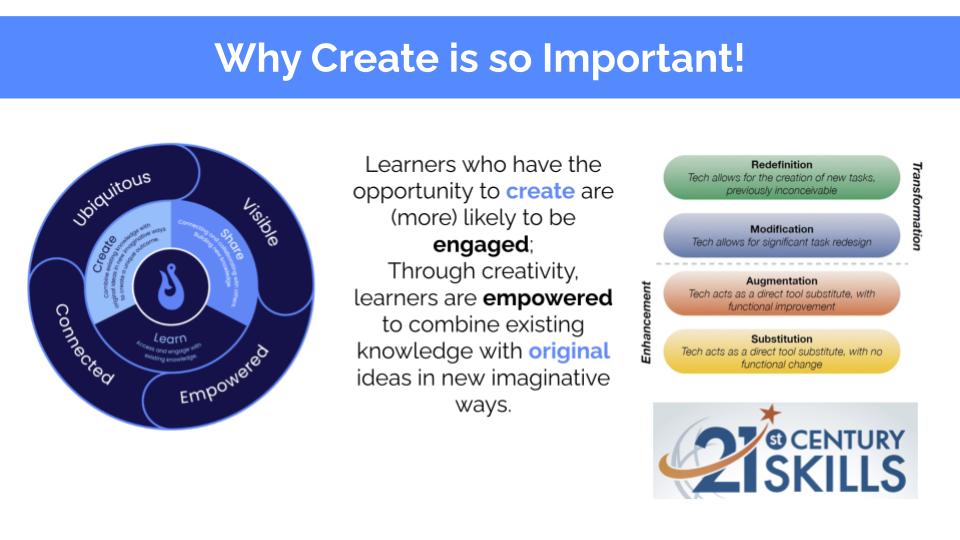
Moreover, sharing on blogs transcends the linear process of learning, creating a dynamic cycle of learn, create, and share. It emphasizes that both the process and the product of learning are equally important. When students share their finished work, they reinforce the feeling of accomplishment. Additionally, sharing stimulates new thinking, often triggered by comments and questions from readers.

While class sites and class blogs are primary online spaces for learners, teachers also use them to share their reading program designs with other educators. This sharing process enables the visibility of program routines and innovations, allowing teachers to learn from one another. It's like having a set of favorite teachers to "stalk" regularly for inspiration and ideas.

Planning for Share
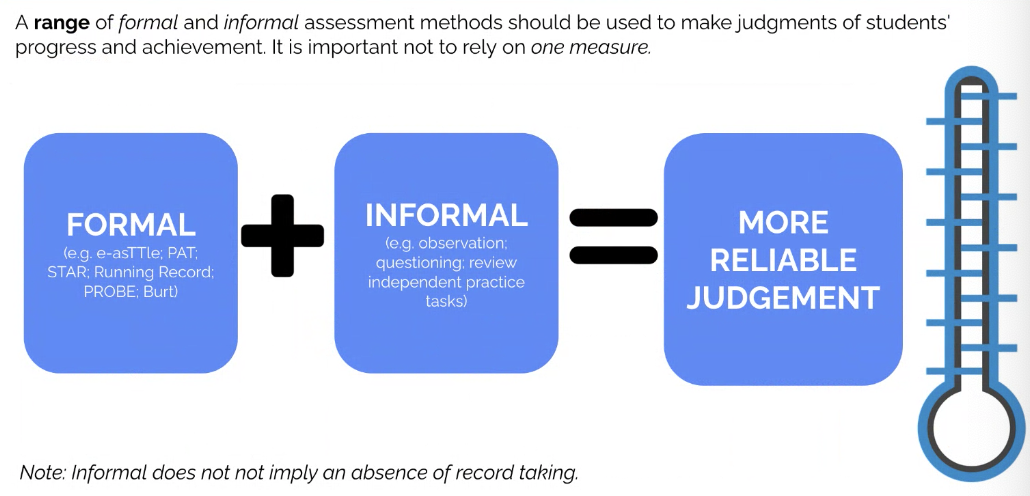
The success of sharing in reading education requires careful planning. To ensure its effectiveness, teachers must consider several factors, including :
  • Encouraging spontaneity without stifling enthusiasm.
  • Inspiring students to share items of their own interest.
  • Creating an easily recognizable icon that prompts students to blog.
  • Monitoring the completion of sharing activities.
  • Defining priority reading-related learning that learners should post to their blogs weekly.
  • Setting clear learning goals and aligning posting schedules with students' availability.
  • Promoting audience engagement through comments and discussions.
  • Prioritizing content quality over quantity.
  • Allowing time for reflection and revision.
  • Establishing a feedback loop for constructive feedback on posts.
  • Encouraging diverse content formats and topics to keep blogs engaging.
Providing effective feedback is crucial for growth in reading education. Feedback can be evaluative (summative), descriptive (formative), or generative (formative). Research shows that descriptive feedback with generative elements is more effective than evaluative feedback.

Teachers should plan and scaffold peer-to-peer feedback, helping students understand what they need to learn, where they stand in their learning journey, and what their next steps should be. Effective descriptive feedback should focus on the learning intentions or goals of the task.

To create a holistic reading experience, it's essential to involve students' families. Deliberate efforts should be made to connect with families and engage them in reading activities. Some strategies include:
  • Reinforcing ways for students to take books home and involve their families.
  • Encouraging families to participate in reading challenges.
  • Soliciting recommendations for texts from families.
  • Creating spaces for family feedback and involvement in reading activities.
Sharing is not just an activity; it's a way of building connections, fostering growth, and enriching the reading experience. I feel that today's session was a fitting end to the 9 sessions we've had for RPI this year.  I am very thankful to the RPI team for the work they put into designing and facilitating our programme.  I have come away from each session with so much new knowledge and many ideas I am always excited to implement.  Thank you to the RPI team, my RPI mentor and my school for signing me up to participate in this year's RPI course.  Ngā mihi nui.

Teacher Inquiry - Create Tasks Implemented in Reading

Session 8 of the Manaiakalani Reading Programme Intensive (RPI) focused on different types and kinds of opportunities for students to create.  Our homework was to incorporate a type of create task into our reading programme.  Below I have linked (with permission) some of my student's completed create tasks as well as what the teacher / student instructions were for each task.

Text : Changing Matter on Epic.

Here are the instructions students received at the end of the response to text slides

  • CREATE: Create a DLO that shows and explains “Changing Matter”.  Use any information you think is important from the text to guide you.  Your DLO can be an animation, slideshow, or poster.

Kato chose to create an animation of an ice cube melting then evaporating.  Click here to read his blog post.  (Shared with permission.)

Text : Aztec Attack.

Here are the instructions students received at the end of the response to text slides

  • CREATE: Choose a specific scene from the story "Aztec Attack!" that you want to recreate in Google Drawings. This could be the moment when Izquixochitl first spots the approaching men or the village's preparations for battle.

Loa chose to recreate the scene in the story where two parties are at war.  Click here to read his blog post.  (Shared with permission.)

Text : Bright Family on Epic.

Here are the instructions students received at the end of the response to text slides :

  • CREATE: Create your own backdrop of a universe you think they may come across in the next part of the story.  Use the background remover app to insert yourself into that universe.  Use a speech bubble to show what you would be saying in that situation! 

This is an example of a "short" create task that could and was asked to be completed within the 1 hour block.  Click here to read Dito's blog post.  (Shared with permission.)


What went well : 
  • Students enjoyed seeing themselves in their Create tasks.
  • Students appreciated the choice of medium, and were more engaged when they got to choose the format.
What didn't work so well : 
  • Some students work better with more guidance (where they have to decide less) but some maybe needed less guidance in order to feel and be more creative.
  • Some students went on a tangent to the point the task was no longer connected to the task.
What I will change for next time : 
  • For my more advanced groups, I found that I've often left more decisions for the students to make compared to my lower groups where I would scaffold them a bit more.  
  • I will change my Create tasks so each student gets a sufficient range of tighter tasks that they can start and finish in a block, as well as looser tasks they are given a week to finish on their own.  That way the students can achieve completion more often.

Monday, August 21, 2023

Create in Reading - RPI Day 4

Today saw the 8th session of the Manaiakalani Reading Practice Intensive (RPI) course. The primary focus of the day was to delve into the "Create" aspect within the Manaiakalani pedagogy—an area I've been eager to learn more about.

Dorothy's introductory session set the stage by emphasising the role of creativity within the Manaiakalani pedagogy. She stressed the importance of fostering student empowerment through creative contributions rather than passive consumption. The resonance of James Gee's quote underscored the significance of nurturing creativity to foster critical thinking and innovative skills. “You don’t empower people by just being consumers. Teaching people to read and not write, teaching people to play and not design is the way to make customers and consumers and not producers and creative thinkers” 

I also learnt about the concept of 'SiSoMo'—the amalgamation of sight, sound, and motion —and how it is used to capture the essence of creativity. This concept highlighted the potential that lies in student responses. Our exploration extended to AI tools such as Craiyon.com and Adobe Firefly, demonstrating how technology can facilitate swift yet meaningful creative projects that lead to deeper insights.


Naomi's session highlighted the beauty of collaborative learning, both 'outside' and 'inside' the create. This approach opens doors for peer co-authoring and co-constructing, nurturing a sense of ownership and pride in their creations.


We got to try out an example of a Create task we could set our students to complete which was creating a 'Book Trailer.'  Here are the instructions we received. I chose to reference the text 'Treasure Island' by Robert Louis Stevenson.
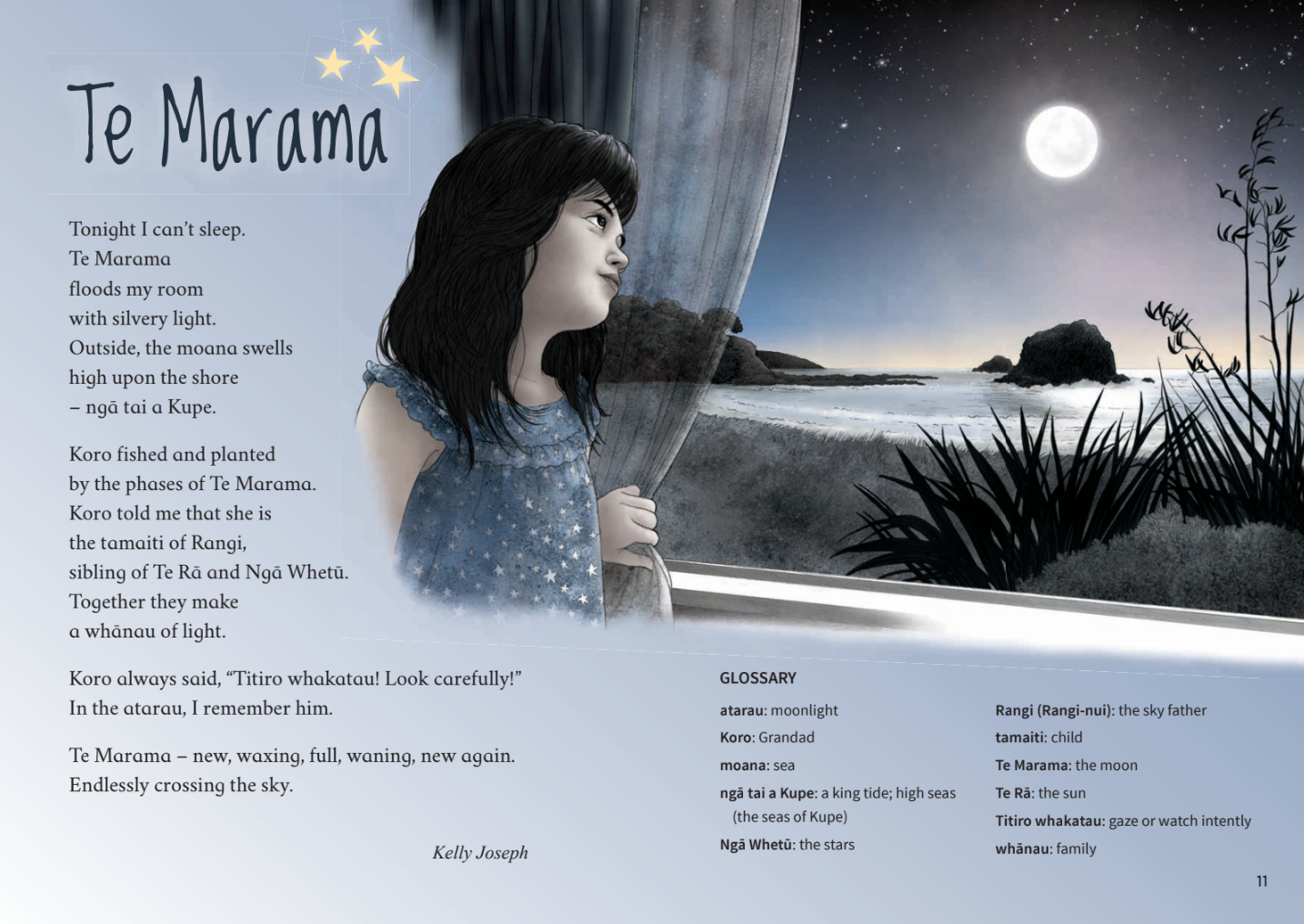
We also created our own visualisation of the poem 'Te Marama' by Kelly Joseph which you can find in the blog post prior to this one.

Before today's RPI session, during my most recent talanoa with my mentor teacher Robyn, we discussed ways I should start teaching reading "deeper" and "wider."  So when we began focusing on teaching and learning over units today - I was pleasantly surprised!  We were shared examples of Google Sites that teachers had created to do a whole novel study.  Instead of viewing my reading sessions as isolated lessons week by week, this approach emphasises continuity and depth.

This approach encourages students to make connections between different concepts and ideas, fostering a more comprehensive understanding of the subject matter.  As students progress through these units, they have the opportunity to build upon their prior knowledge and apply it to new contexts. This method not only promotes in-depth learning but also nurtures critical thinking, problem-solving skills, and the ability to see the bigger picture. Overall, teaching and learning over units, modules, and concepts provides an engaging educational experience that equips students with both knowledge and the skills to connect and apply that knowledge effectively.  I am looking forward to creating opportunities for myself and my students to learn across units in the near future.

Here is an image of the Padlet we as a cohort created to indicate what we felt we needed to work on.

I am looking forward to implementing some new 'Create' tasks into my reading sessions, as well as teaching and learning across longer units. Ngā mihi to the Manaiakalani RPI team for today!


Te Marama by Kelly Joseph - RPI Create

Today we imagined we were book illustrators using the poem "Te Marama" by Kelly Joseph. We compared our illustrated poem with the published version.  One of the differences between my poem and the published one is I have used much less colour. Another difference is the published version uses illustration to fill the space.  On the other hand, some similarities with my poem are the readability of the font.  I made use of an AI content generator Dorothy introduced us to which is craiyon.com to generate the image of the moon sitting on the ocean.

The parts I like more about the published version is that it uses more illustration to fill the space, which would probably appeal more to students than a minimalistic version such as the one I have created.  Below are some of the other versions my cohort created.  The images are linked to their professional blogs. Ngā mihi Mrs Lagitupu and Mr Hughes for your work. 


Wednesday, August 2, 2023

Teaching for PB4L

As educators, creating a positive learning environment is crucial. At Panmure Bridge, we are a PB4L school.  This means we teach for positive behaviour for learning.  Teaching for positive behaviour lays the foundation for an empowering classroom where students thrive academically and emotionally. As a beginning teacher, I recognise that I have much room to grow in terms of intentional and deliberate acts of teaching that reflect this.

  • Setting clear expectations for behaviour and reinforcing positive actions is crucial. Recognising students' efforts and celebrating their achievements helps foster a positive and encouraging atmosphere.
  • Being a role model for students and encouraging self-reflection supports their personal development.
  • Integrating social-emotional learning and restorative practices equips students with valuable life skills.
  • Open communication with students and parents builds a strong partnership. Collaborating with all groups involved can enhance the sense of unity and shared responsibility.
One aspect of PB4L I will need to explicitly work on is providing feedback and fair consequences for problem behaviour.  Understanding the different response strategies will be especially important : prompting, redirecting, reteaching, conversing with students and providing choice.

Thinking - RPI

Day 7 of the Manaiakalani Reading Programme Intensive (RPI) focused on the aspect of 'thinking' and how we can best incorporate this into our reading programmes and planning.  I found this particularly useful for me to consider in the future when designing response to text activities.

As teachers of reading, one of our main goals is to foster critical thinking skills in our students. This allows them to engage with texts at a deeper level, analyse different perspectives, and make informed decisions. In Day 7's session, we talked about how response to text activities can provide opportunities for students to practice higher order thinking. We also explored the importance of moving beyond literal comprehension and how we can effectively design tasks to promote independent critical analysis.

Moving Beyond Literal Comprehension : Something I had never thought about before was the importance of moving beyond literal comprehension.  Literal thinking is an essential foundation for reading, but it is only the starting point. If we keep teaching students "on the line", they aren’t able to go to that level of reading intuitively where they read between the lines.

To fully engage with a text, learners need to develop the ability to analyse, interpret, evaluate, and create something from their new learning. These higher order thinking skills enable students to explore complex meanings, consider multiple perspectives, and form their conclusions.

Throughout the day we focused on three effective ways we can plan for learners to think beyond the literal : 

  1. Modelling  (critical analysis of text, questioning & ‘thinking about thinking’)
  2. Response to Text Activities (including higher level ‘Create’)
  3. Extended Discussion

We spent a bit of time going through examples of effective response to text activities, as well as getting a start on some tasks that incorporated the different levels of thinking. When designing response to text tasks, it is important to provide a balanced range of thinking opportunities. We can use the "levels of thinking" approach to scaffold students' critical thinking. The levels include:

Literal Level: Understanding the surface meaning of the text.

Interpretive Level: Analysing and making inferences from the text.

Evaluative Level: Evaluating the text, questioning its perspectives, and identifying bias.

At first I had a moment of concern, as I couldn't recall a time I had deliberately planned for "interpretive" and "evaluative" thinking from my students.  Thankfully, I realised that I had indeed included opportunities for these levels of thinking, but had not realised that I had done so.  One major learning for me is that students would benefit from me being more deliberate in planning tasks that require more than just the literal level of thinking.

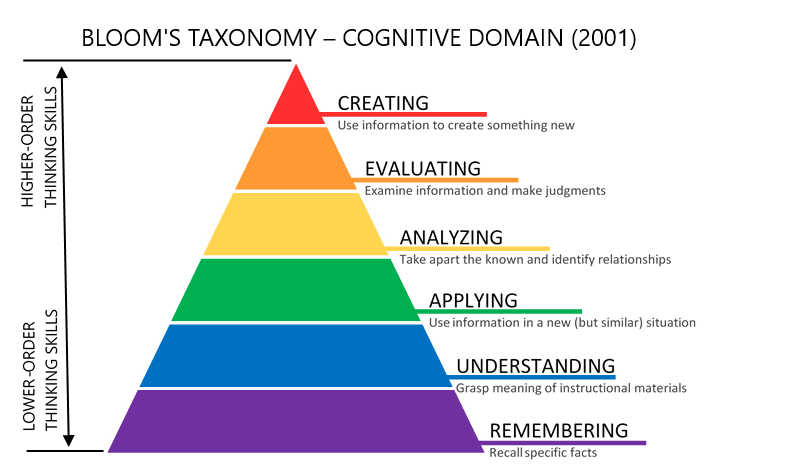
One part of the day that I feel helped to grow my pedagogy was when Georgie began breaking down Bloom's Taxonomy, in regards to analysis : 

We can consider analysis as the opposite to summarising.  Here are the key things about analysis I took from our session :

  • Summarising involves paraphrasing to make a shorter version of the source text, reducing it to its main ideas or key information.  Analysis, on the other hand, involves close reading of the text to identify particular features that communicate or reinforce the main ideas i.e. noticing details in language, structure and other devices the author has chosen to achieve their purpose.
  • A well understood strategy for understanding deeper, more complex meanings is breaking down the whole into its component parts. Bloom’s shows the bridge into synthesis and evaluation via analysis such as breaking a topic or idea into its elements or examining a subject from different perspectives.
  • It helps us see how the “whole” is created from the “parts.” It’s easy to miss the big picture without seeing how the parts are connected. Analysis helps reveal the connections and relationships between the parts to extend and deepen understanding.
  • Analysis can be used for two things
    • To zoom in. “What word does the author use to show us…”
    • To zoom out. “What other evidence connects to the big idea…?”
    • This made me realise that I need to be more deliberate in "zooming out" with my akonga.
Here are some other key points I have taken away from Day 7  : 

  • Incorporating critical analysis into response to text activities helps students develop metacognitive skills. They learn to question and evaluate the content they encounter actively. For instance, students could examine historical photographs, consider the story behind them, and reflect on the historical context.
  • The ultimate goal is to build learners' independence as critical thinkers. Teachers can model critical analysis and encourage students to lead discussions independently. Creating a safe and collaborative environment for these discussions allows students to explore diverse perspectives and develop their ideas.
  • Incorporating response to text activities into our teaching provides a powerful platform for students to develop critical thinking skills.
  • By moving beyond literal comprehension and engaging with texts at deeper levels, students become more active and informed readers.
  • Through the "Levels of Thinking" approach, they analyze, interpret, evaluate, and create, leading to a deeper understanding of complex texts and ideas. 
Meitaki maata to the Manaiakalani RPI team for Day 7!

Tuesday, July 25, 2023

Word Work - RPI Homework

Day 6 of the Manaiakalani RPI course brought us valuable insights into vocabulary and decoding, two critical aspects of fostering strong literacy skills in our students.  You can read more about Day 6 here.

Our homework for the day was to engage our students in two word work activities.  I chose to replicate the degrees of meaning task as well as the spotlight task.  In our previous coaching conversation, my RPI mentor Robyn created an extension of the spotlight task that involves 'sacawac'ing words.  The engagement and enthusiasm from the students were palpable, and it reaffirmed what the RPI course taught about the importance of equipping our learners with a robust vocabulary.

For both tasks, students needed to be in buddy groups.  The RPI course explained that the conversations that happen in these spaces is actually where a lot of learning can take place!  Here's a quick summary of the tasks I implemented aswell as the instructions the students received for them.  All tasks are linked.

Degrees of meaning : 

  1. Each take a turn to read out the word and both examples.
  2. Discuss which of the two examples best matches the word. Use your ground rules for talk to reach an agreement.
  3. Be prepared to take turns sharing the reasons for your groups’ choices when we come back together.

For this task, we also discussed relevancy of vocabulary to the context of the story.  We talked about how some words can different meanings depending on the context they are in, so it is important to take that into account when we learn new vocabulary.  My students enjoyed working in partners for this task and could all find success in completing this task as they could all complete this task and give an explanation for their decisions.

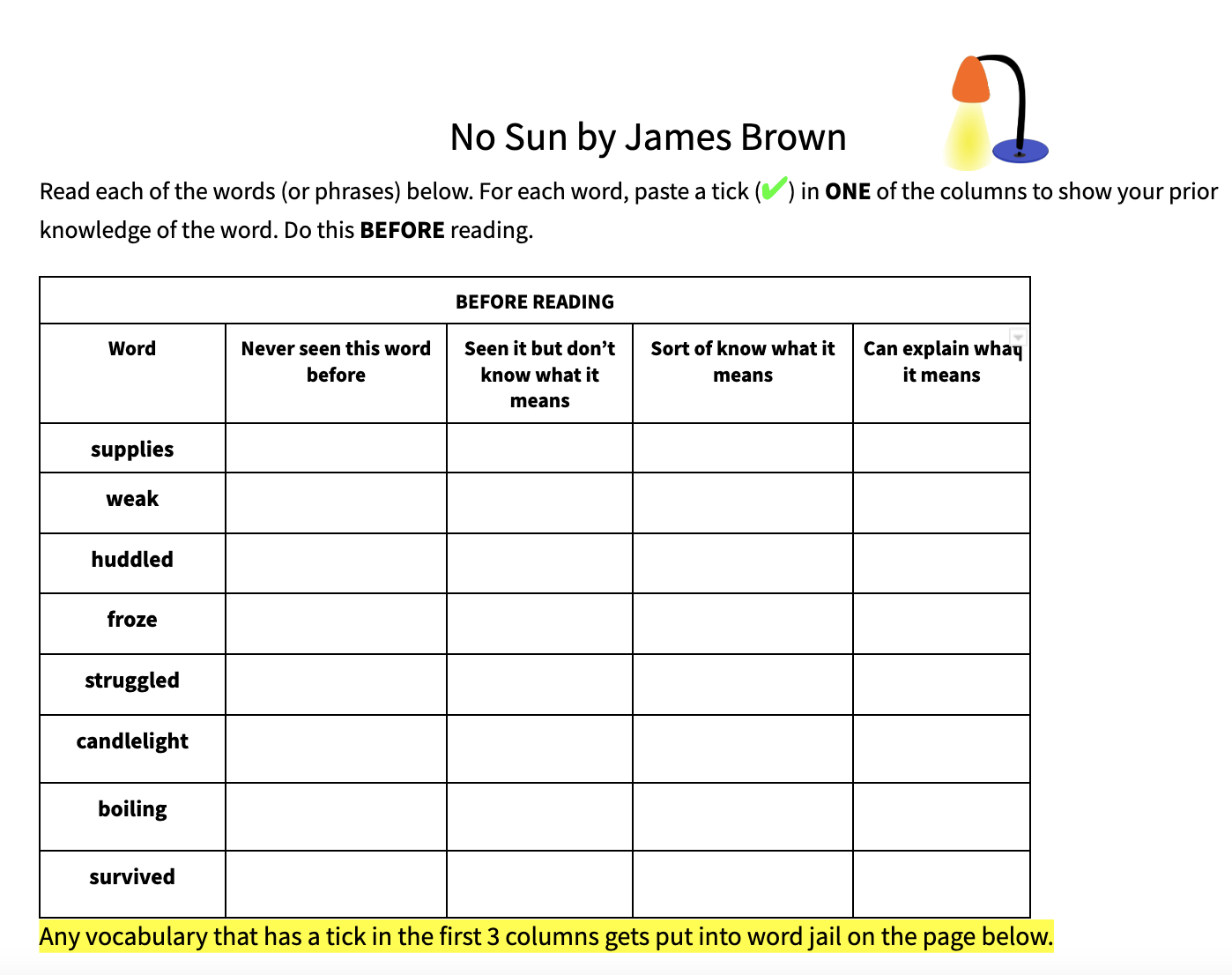
Instructions the students receive : 
1. Read each of the words (or phrases) below.
2. For each word, paste a tick (✔) in ONE of the columns to show your prior knowledge of the word.
3. Do this BEFORE reading.

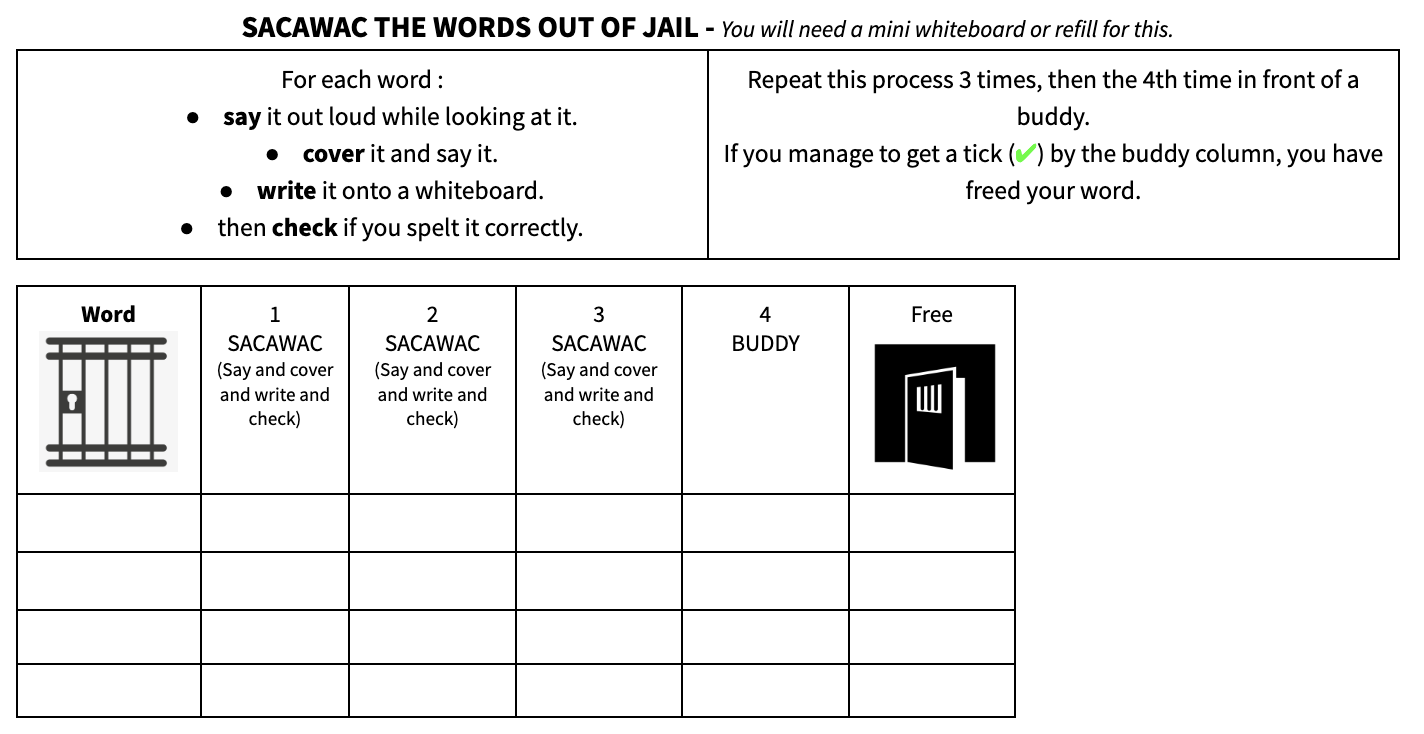
Extension of the spotlight task - SACAWAC
Robyn suggested a possible extension I could make to the spotlight task could be where students need to SACAWAC the vocabulary.  Any vocabulary the students could not explain the meaning of, they needed to put into 'Word Jail.'  The only way to get them out, is to SACAWAC them.  What it means to SACAWAC : Say and cover and write and check.  For each word students had to : say it out loud while looking at it.  Cover it and say it. Write it onto a whiteboard.  Then check if they had spelt it correctly.  They thoroughly enjoyed this activity.

Since we first tried the spotlight and SACAWAC tasks last week, my students have been eager to show me their ability to spell their new vocabulary and have since suggested that I could test them on it. We have now set up our reading lessons so that our second reading session in a week (after we have SACAWAC'd words), I run a quick spelling test with that specific vocabulary in our small groups.  The vocabulary that is in this spotlight/SACAWAC activity, is the vocabulary they are tested on.  This has been lots of fun and has definitely improved my students' confidence in writing as well as their eagerness to expand their vocabulary.

For the purpose of the RPI homework, I facilitated these activities in small groups to make sure my students understood the task and how to complete it.  Going forward, I will make most of them independent tasks they complete before they see me or after.  I am looking forward to going through the RPI resource register to see what else I can use for my learners.

Teacher Inquiry - Reading Comprehension

This term, my teaching inquiry continues to focus on improving reading comprehension for my Year 7 and 8 students. Following a recent lesson...