Tuesday, July 25, 2023

Word Work - RPI Homework

Day 6 of the Manaiakalani RPI course brought us valuable insights into vocabulary and decoding, two critical aspects of fostering strong literacy skills in our students.  You can read more about Day 6 here.

Our homework for the day was to engage our students in two word work activities.  I chose to replicate the degrees of meaning task as well as the spotlight task.  In our previous coaching conversation, my RPI mentor Robyn created an extension of the spotlight task that involves 'sacawac'ing words.  The engagement and enthusiasm from the students were palpable, and it reaffirmed what the RPI course taught about the importance of equipping our learners with a robust vocabulary.

For both tasks, students needed to be in buddy groups.  The RPI course explained that the conversations that happen in these spaces is actually where a lot of learning can take place!  Here's a quick summary of the tasks I implemented aswell as the instructions the students received for them.  All tasks are linked.

Degrees of meaning : 

  1. Each take a turn to read out the word and both examples.
  2. Discuss which of the two examples best matches the word. Use your ground rules for talk to reach an agreement.
  3. Be prepared to take turns sharing the reasons for your groups’ choices when we come back together.

For this task, we also discussed relevancy of vocabulary to the context of the story.  We talked about how some words can different meanings depending on the context they are in, so it is important to take that into account when we learn new vocabulary.  My students enjoyed working in partners for this task and could all find success in completing this task as they could all complete this task and give an explanation for their decisions.

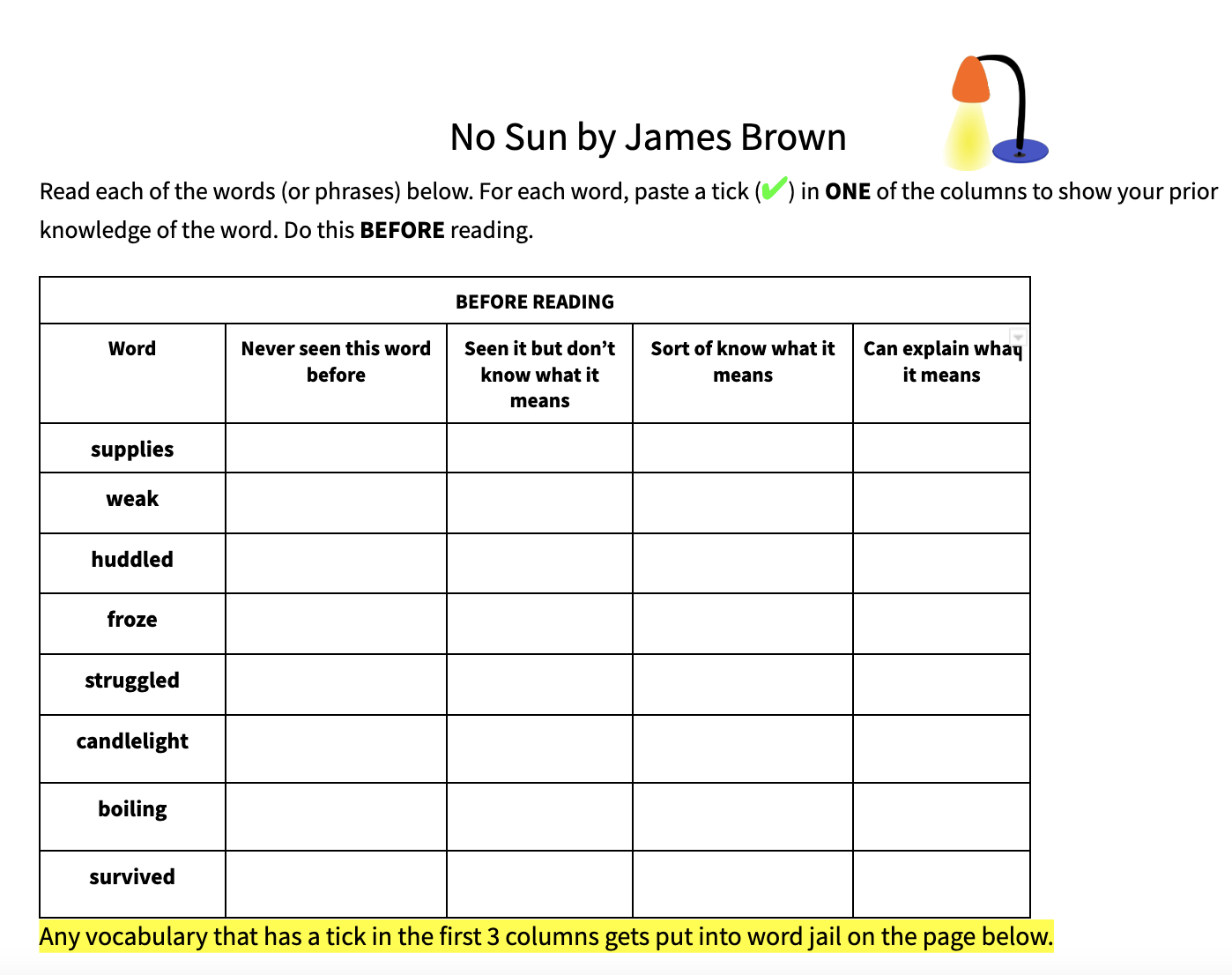
Instructions the students receive : 
1. Read each of the words (or phrases) below.
2. For each word, paste a tick (✔) in ONE of the columns to show your prior knowledge of the word.
3. Do this BEFORE reading.

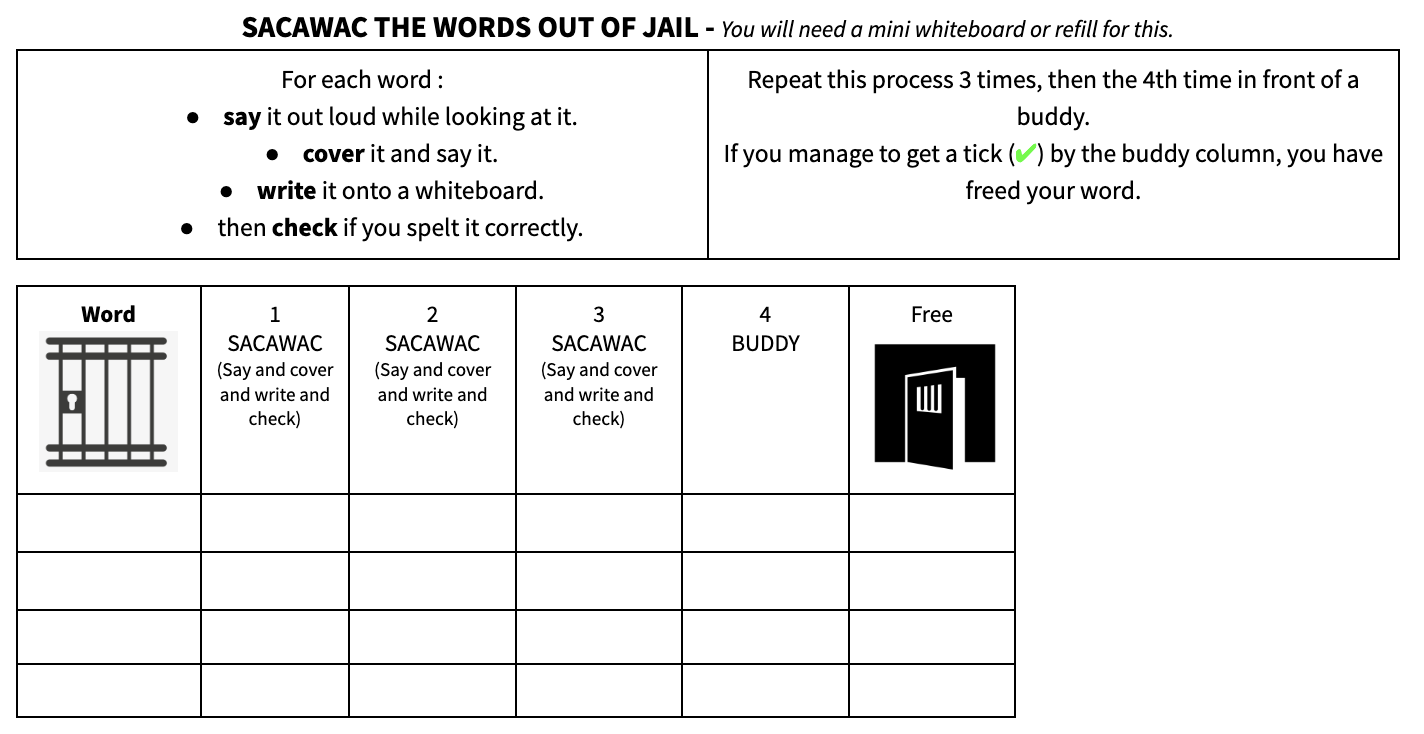
Extension of the spotlight task - SACAWAC
Robyn suggested a possible extension I could make to the spotlight task could be where students need to SACAWAC the vocabulary.  Any vocabulary the students could not explain the meaning of, they needed to put into 'Word Jail.'  The only way to get them out, is to SACAWAC them.  What it means to SACAWAC : Say and cover and write and check.  For each word students had to : say it out loud while looking at it.  Cover it and say it. Write it onto a whiteboard.  Then check if they had spelt it correctly.  They thoroughly enjoyed this activity.

Since we first tried the spotlight and SACAWAC tasks last week, my students have been eager to show me their ability to spell their new vocabulary and have since suggested that I could test them on it. We have now set up our reading lessons so that our second reading session in a week (after we have SACAWAC'd words), I run a quick spelling test with that specific vocabulary in our small groups.  The vocabulary that is in this spotlight/SACAWAC activity, is the vocabulary they are tested on.  This has been lots of fun and has definitely improved my students' confidence in writing as well as their eagerness to expand their vocabulary.

For the purpose of the RPI homework, I facilitated these activities in small groups to make sure my students understood the task and how to complete it.  Going forward, I will make most of them independent tasks they complete before they see me or after.  I am looking forward to going through the RPI resource register to see what else I can use for my learners.

Sunday, July 23, 2023

Swimming - Safety and Responsibility

As a beginning teacher, the prospect of taking my students to the swimming pools for PE filled me with a mix of excitement and nerves. Here are some key insights I gained :

Setting Clear Expectations :  It is important to give clear rules and guidelines to the students as they set the tone for the trip.  We decided to make a lesson out of it the day prior to make sure our students were well aware of their expectations so they could be ready to manage themselves.  Students made a DLO of the expectations, as well as a reminder card with the times they needed to be ready.  This promoted managing self and taking responsibility.  

Organisational Skills: The importance of being well-organised well in advance of the trip cannot be understated. Creating checklists and communicating with parents early on ensured a smooth and stress-free morning, setting the tone for the rest of the day.

Taking Responsibility: As one of the teachers in charge, I learnt the great deal of responsibility teachers have for their students' safety. Constantly supervising and actively reminding students of the expectations ensured efficiency.  Procedures like head counts and marking rolls were important and helped staff and students alike feel well taken care of.

Sticking to the Schedule: Proper time management was vital for a successful outing. Sticking to the planned timings allowed us to make the most of our pool time without feeling rushed.  This is something I may need to go over again with my students.

Clear and Explicit Instruction: Providing clear instructions about changing times and other activities kept everyone on track. It reduced confusion and contributed to a well-structured day.

Importance of Punctuality: Emphasising the significance of being in the right place at the right time fostered a sense of teamwork and contributed to the overall success of the trip.

Overall, my priority as a teacher on this swimming trip was the health and safety of my students.  This first swimming trip taught me valuable lessons about effective planning, clear communication, and the responsibility that comes with being a teacher. It also reinforced the importance of safety and the joy of creating experiences with my students. As a beginning teacher, I am grateful for this experience and look forward to applying these insights to the rest of my educational career.

Tuesday, June 27, 2023

Austin's Butterfly - Feedback and Feedforward

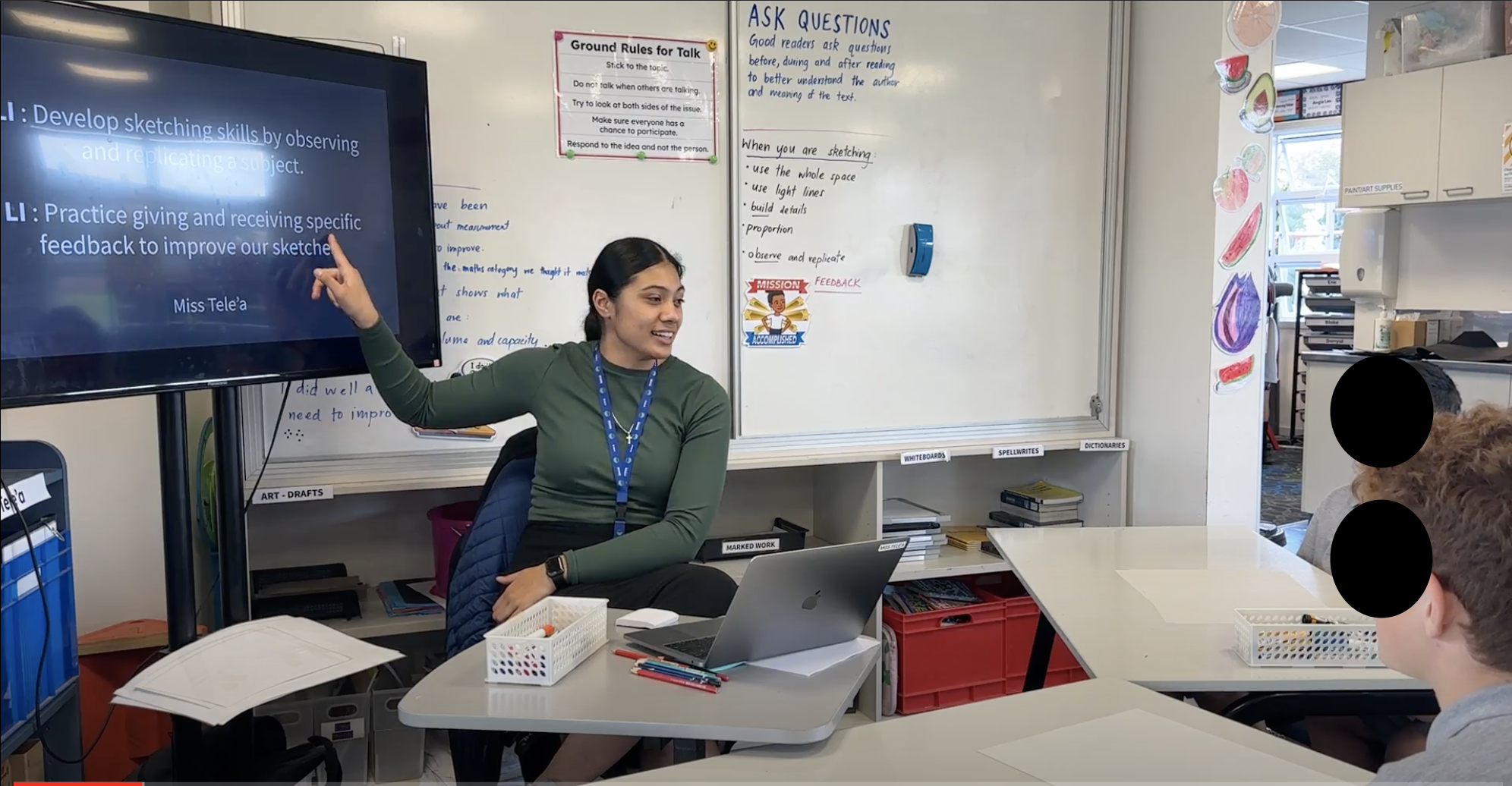
 Recently I conducted the first part of an art lesson with 3 of my target students. Our focus was on developing sketching skills through the use of specific feedback.  I modelled this lesson after being shown "Austin's Butterfly" by my mentor teacher.  This was very useful having something to watch and draw from when creating my own lesson for my akongā.  Reflecting on my own notes and the feedback from my mentor who observed the lesson, means I can gain valuable insights into the effectiveness of my instructional strategies.


To begin the lesson, I reminded the students about the importance of following our ground rules for respectful conversation, which were prominently displayed. This served as a helpful reference point throughout the lesson.

  • The learning intentions (LI) for the lesson were twofold: to develop sketching skills by observing and replicating a subject, and to practice giving and receiving specific feedback to improve our sketches. I made sure to clarify these intentions at the outset and provided the necessary materials such as A5 paper, pencils, and a reference image of a monarch butterfly.
  • To engage the students in a discussion about feedback, I asked them what it meant when someone gives their "2 cents" in a conversation. This question prompted pairs of students to share their thoughts and then share their responses with the whole class. I captured their ideas on the board, ensuring that their voices were heard and acknowledged.
  • The main video activity involved watching "Austin's Butterfly," a story about a first-grade student who receives feedback on his artwork. I challenged the students to pay attention to what effective feedback looks like during the video. They used newsprint to record their observations.
  • After watching the video, I guided the students through a sketching exercise. I encouraged them to draw from memory, emphasising the importance of using the whole space, observing carefully, using light lines, building details, and considering proportion. I provided a visual example to illustrate the concept of proportion.
  • To co-construct success criteria for effective feedback in art, I asked the students what they believed promoted growth and improvement. Their answers were transcribed on the board. We concluded that feedback should be specific, respectful, and actionable.
  • The lesson concluded with a feedback activity, where students were assigned partners and given sticky notes to provide feedback to each other. I encouraged them to use the sentence frame, "I really like how you ________. Next time, you could try ________ to make it even better." This structure aimed to promote constructive and supportive feedback.

In retrospect, I acknowledge the strengths and areas for improvement in the lesson. The engagement level was high, and the use of visual aids, such as the video and example sketches, enhanced the students' understanding. However, I could have provided more visual prompts throughout the lesson, such as displaying the monarch butterfly image earlier.

In future lessons, I will make more deliberate connections to prior learning, and make sure that new concepts can be connected to the students' existing knowledge.  One thing we noticed was that I talked "about" feeding forward, but I never once actually referred to it as "feedforward." This comes down to being explicit with the words I use when teaching a group.  I need to use the words I want my students to use.  Additionally, I will try to use terms such as "learning intention" and "success criteria" more explicitly to enhance student understanding.

Overall, the feedback from my mentor and my own reflections will guide me in refining my teaching strategies. I appreciate the suggestions to make feedback a weekly focus and to continually seek examples of how I can improve my lessons. By implementing these recommendations, I am confident that I will create even more meaningful and effective learning experiences for my akonga.

Magic of Sgraffito

In our weekly staff meetings, our principal has been treating us to art sessions. One of the techniques we have learned most recently is called sgraffito. Sgraffito is an art technique that involves scratching the top layer of a material to reveal a contrasting layer beneath. It's a simple yet captivating way to create unique designs and textures in artwork. Sgraffito has been used in various art forms for centuries.


During our art sessions, we had the opportunity to try our hand at some sgraffito. We first used retsol crayons to block in any mix of colors we'd like onto a piece of paper. Richard mixed acrylic paint, Indian ink, and a little dishwashing liquid to create a thick and gooey paint. We painted this mixture over our crayon and left it to dry until the next staff meeting. The next session, we began scratching the top layer to reveal the hidden colors below. It was a fun and interactive process that allowed us to experience the task before we set it to our students.

Since sgraffito involves sharp tools, safety is a priority. We discussed the importance of handling the tools responsibly and taking necessary precautions to avoid accidents or injuries. When layering colors, it is useful to remember that the top color should be darker than the base. This contrast adds depth and makes the scratched designs pop, creating a visually striking composition.

Sgraffito provided us with a hands-on and enjoyable experience during our staff meeting. Ngā mihi, Richard.

Sunflower Artwork : Chalk, Crayon and Dye

At our weekly staff meetings, our principal, Richard, has been leading engaging art sessions.  Drawing inspiration from Vincent van Gogh's iconic paintings and captivating images, we delved into the world of sunflowers, where we learned to create artworks using crayons, chalk, and dye.  Richard modelled how we might introduce this lesson to our own students.

To start, Richard displayed various sunflower paintings and images to immerse us in the intricacies of these flowers. We also incorporated reading tasks linked to Vincent van Gogh (VVG) to deepen our understanding of his artistic style and vision.  

To deepen our students' connection with sunflowers, Richard suggested buying fake sunflowers from a local shop, and allowing the kids to closely examine them. This hands-on experience would give them a chance to appreciate the delicate petals, explore the seeds, and even discover links between sunflowers and things like the oil they produce.

For the art process, Richard advised starting with sketching using coloured chalk, focusing on capturing the essence rather than intricate details. The kids could then use RETSOL crayons to colour in the leaves and stem with solid blocks of colour, experimenting with complementary colours for the background. Adding dye would create stunning black lines as the chalk absorbed the colour.

Ngā mihi Richard for our art lessons this term.


Monday, June 19, 2023

Vocabulary and Decoding - RPI

On Days 1-3 of the Manaiakalani Reading Practice Intensive we focussed on pillars 1 and 2: Planning for Ambitious Outcomes and Planning to Use Diverse Texts. Today we continued to focus on the second pillar, but with a more detailed analysis of Guided Reading. Regular and systematic Guided Reading offers particular benefits for teaching, observing and scaffolding learners to develop skills and strategies to better comprehend text with teacher support. 

Dorothy started off the session discussing the Manaiakalani Kaupapa and Shared Pedagogy, especially in relation to reading and addressing the reading achievement challenge. The Welcome to School language metrics showed that many children in the Tamaki area start school with a developmental language level of 3-4 years, highlighting the need for vocabulary enrichment opportunities. What is important is that there are lots of chances to improve vocabulary.

Vocabulary plays a vital role in reading, and it's important to provide robust instruction to develop strong word knowledge. One key aspect is assessing students' prior knowledge and identifying any gaps that need to be filled. By giving students words beforehand, we can gauge what they already know and what areas we need to focus on. It's important to help students understand vocabulary in context, as it allows them to see how words are used and their meanings in different contexts. Making target words visible is essential, as it enables students to see, say, and write the words to reinforce their understanding. 


One task we did today was the "Spotlight" Word Knowledge Organiser.  Currently, I write a list of vocabulary we need to understand before guided reading, and we discuss their meanings before we read.  As we read, we tick the words however many times they are read.  I plan to use the template linked in place of this.


What I found particularly interesting is that research shows that vocabulary knowledge accounts for a significant portion (80%) of the variation in reading comprehension scores. A learner's vocabulary serves as the strongest predictor of reading comprehension, and by Year 5, 70% of reading difficulties are related to vocabulary. 

Additionally, reading comprehension is closely linked to oral vocabulary skills. It's essential to incorporate pronunciation practice when introducing new words during guided reading sessions.  Currently, I often call out "I say, you say" to promote the pronunciation of new words to my akonga, but I definitely have room to become more explicit in teaching pronunciation.  Word knowledge develops incrementally through repeated encounters, and can allows us to foster high-quality literacy learning experiences.  My key work on for this can be summarised by these words : "Repetition without boring."
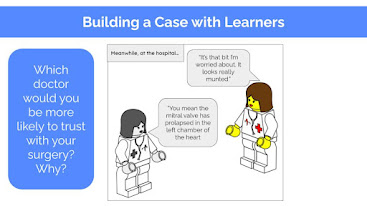
One of my key takeaways from the "Chalk 'n Talk" session with Naomi was : ALL students can benefit from high-quality vocabulary instruction. Words can be known to different levels of knowledge.  This was a good reminder to me that : although it is said 'learning to read' transitions into 'reading to learn' by the time a student gets to senior school, even students who have a large vocabulary repertoire can enrich their knowledge in ways that make it more accessible and productive.

The biggest learning I am excited to take away with me is what I learnt about vocabulary instruction, specifically how it is crucial to select and teach Tier 2 words, which are less frequent but have wide applicability across various contexts and are more academically oriented. These words, such as "hilarious," "endure," and "compare," have a powerful impact on verbal functioning and contribute to precision and sophistication in language use.  As learners are less likely to encounter Tier 2 words in everyday conversation, targeted teaching becomes essential.

Ngā mihi to the RPI team for today's session.  I have come away with an improved understanding of vocabulary and decoding and many ideas I am excited to implement in Term 3.
RPI Day 5 Homework

This blog post is a reflection on the homework tasks assigned during the Manaiakalani Reading Practice Intensive. Day 5 focused on planning a reading programme, and challenged us to adjust our timetables, implement engaging lessons, and seek feedback from our mentors. In this blog post, I will share my homework, the changes I made to my timetable and independent activities, the exciting 'Great Beginnings' lesson I observed and carried out, and the valuable feedback I received.

Adjusting My Timetable and Independent Activities:

One of the key tasks was to review our timetables and make necessary adjustments.  I discussed with my mentor ways I could better incorporate : read alouds, vocabulary work, and more purposeful follow up activities.  I now make sure to read aloud in every guided session even if it is just a page or two.  Something that has been working well that we have started doing, is using a smaller whiteboard to write down the key vocabulary that is in the group's text and guided reading doc.  When we come across the vocabulary in the text, the students need to tick the word.  This has helped them to make meaningful connections and I have seen the use of this vocabulary in other work.  In regards to follow up tasks, we were told to focus on high expectation independent activities.   I discussed with my mentor that I felt I had a habit of designing my follow up tasks almost "too specific" to the text, so I was unable to reuse them.   After reflecting on this, I created templates that I am able to use across any curriculum, and for any text.  This has helped the flow of lessons and class learning time.

Implementing a 'Great Beginnings' Lesson:

As part of the homework, I had the opportunity to observe Robyn conduct a 'Great Beginnings' lesson with one of my reading groups. My observation notes of this lesson are linked here. Robyn delivered a captivating lesson centred around exploring mood and atmosphere.  After observing Robyn teach this lesson, I then recorded myself carrying it out.  To scaffold their writing process, I provided a writing frame that guided their exploration of captivating opening lines. The lesson not only stimulated their creativity but also sharpened their awareness of the power of great beginnings in storytelling.  Here is a link to the lesson we worked through.  Here is a link to one of the student's published work (shared with permission.)

Seeking Feedback from my Mentor:

One thing I have learnt this year is that feedback plays a crucial role in our growth. To gain insights and improve my practice, I find conversations with my mentor to be very helpful. We discussed the changes I made to my timetable and independent activities, the 'Great Beginnings' lesson, and the overall impact on student learning. My mentor highlighted areas of strength and offering suggestions for further improvement. This process helps me to better support my students' progress.


Looking Ahead and Embracing Consistency:

As I reflect on my journey during the Manaiakalani RPI so far, I have realised that some changes are best implemented gradually. I reflected on how I feel like I have made many changes almost every second week to my reading programme.  The reason for this can be linked to my first year of teaching where I am trying to find my feet, aswell as being exposed to so many amazing resources that I want to make use of.   In considering the well-being and progress of my students, I have decided to maintain consistency in my teaching approach for the remainder of the term. 


Teacher Inquiry - Reading Comprehension

This term, my teaching inquiry continues to focus on improving reading comprehension for my Year 7 and 8 students. Following a recent lesson...